


Home Laboratory
The dental laboratory inside the clinic
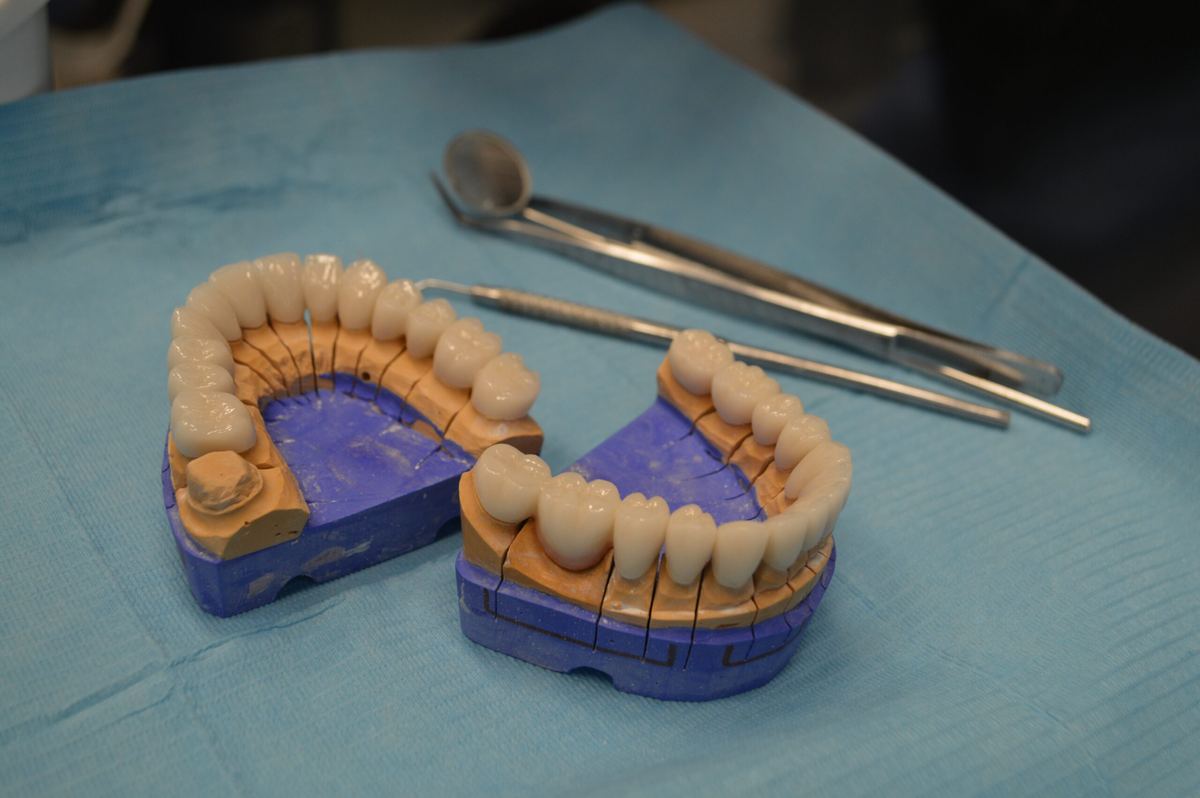
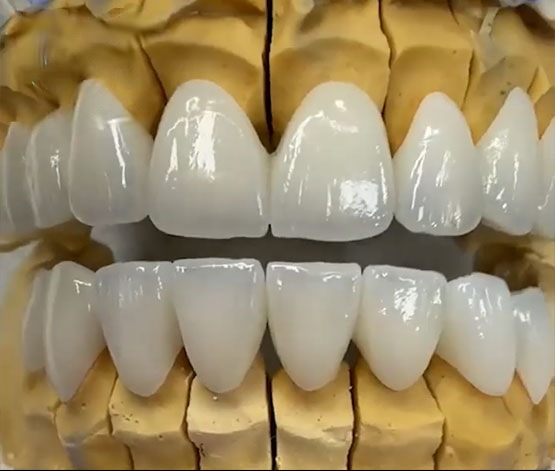
Crowns, bridges and full arches made inside the clinic, with CAD/CAM digital technology and the dental technicians beside the dentist.
On this page: what the laboratory makes, inside the laboratory and the rooms. The prices are in the price list: prices of crowns, bridges and prosthetics.
- Crowns and bridges in 4-6 days
- Full arches in 6-7 days
- CAD/CAM digital technology
 Dental Prosthetics
 Crowns, bridges and dentures
 Implantology
 About Us
5.0184 reviewsThe clinic’s Google profile,
The laboratory on video
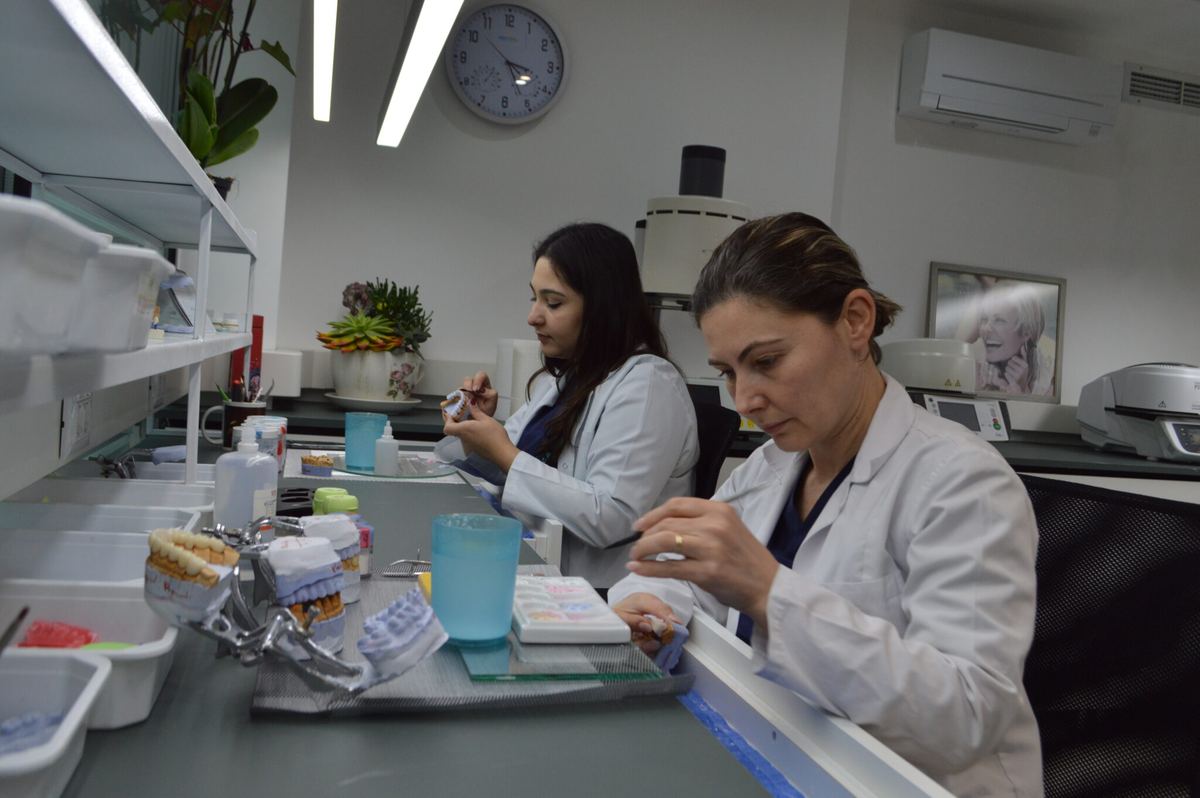
The dental technicians at work.
Creadent’s laboratory has over 20 years of experience. It started as an initiative of Mrs Liljana in 1993, working with around fifty other clinics inside and outside the district of Tirana.
Today the Creadent laboratory works under the direction of Dr. Bila, with modern technology and a qualified team of technicians, and it serves both the clinic’s own patients and other clinics.
Why it matters to have the laboratory in the clinic
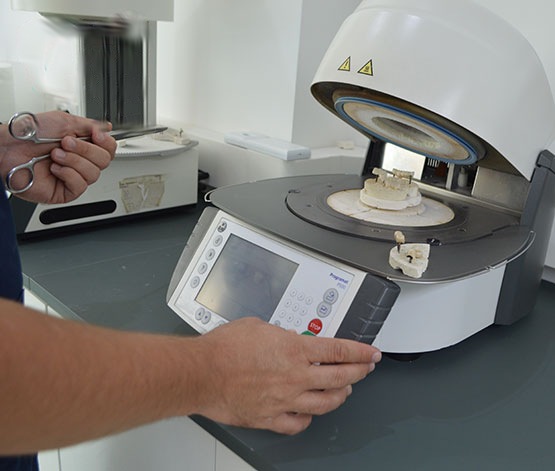
Most treatments need crowns, bridges or full arches, on natural teeth as well as on dental implants, so the laboratory in the clinic plays a central role. From the impression to the finished work is the longest stage of the process, and the one that demands the most attention, both mechanical and aesthetic. A crown, several crowns or a bridge usually take four to six days; new arches, on teeth or on implants, six to seven days. These times can only be kept thanks to digital CAD/CAM technology and the in-house laboratory, with technicians who follow the firing cycles: the pieces have to stay in the furnaces for hours and be taken out at the right moment.
A clinic that has no laboratory, or has it in another building, inevitably builds up delays and sometimes manufacturing errors, starting with the simple temporary teeth. Many clinics rely on an outside provider: the dentist then never has the work in progress under control and, above all, does not see the materials used, which are fundamental to the quality and lifespan of the prostheses. Delivery times always lengthen by two or three days on a job of any size, and for every try-in the technician has to come to the clinic, look at the work in the patient’s mouth and go back to their own laboratory. With the laboratory in the clinic this does not happen: the relationship between the technicians and the dentist is direct, and the technician can check whenever they wish.
What the laboratory makes
- Metal-ceramic crowns
- Zirconia crowns
- E-max veneers
- Simple and flexible prostheses
- Custom abutments, in metal and in zirconia
- Flexible and simple skeletal prostheses
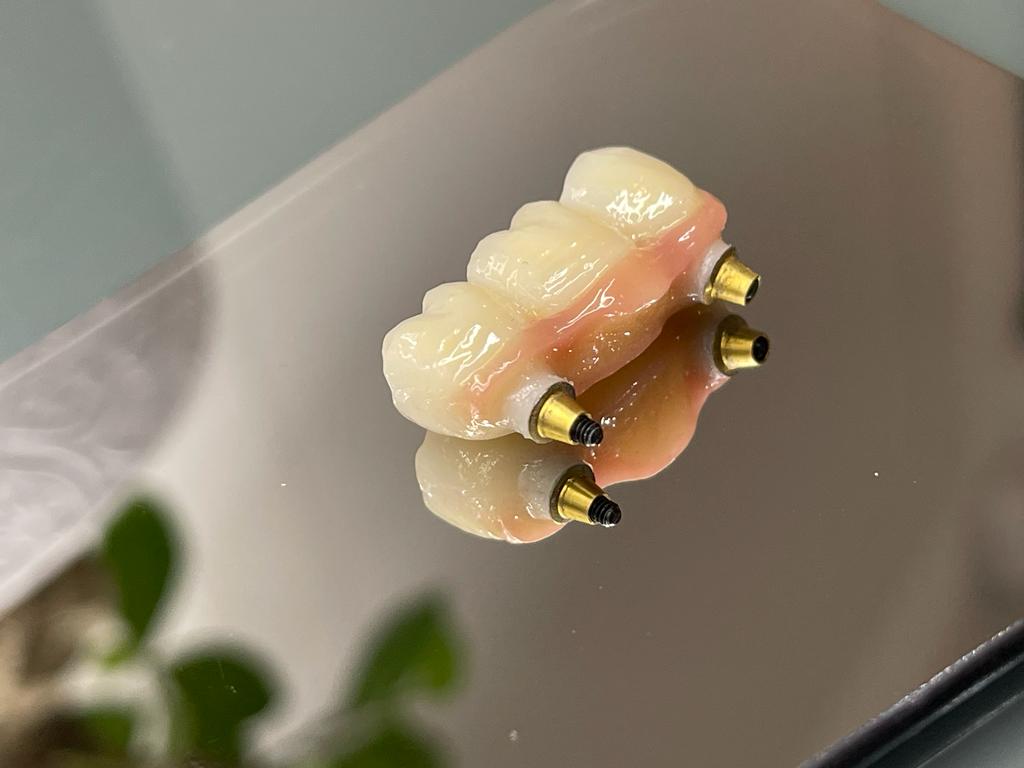
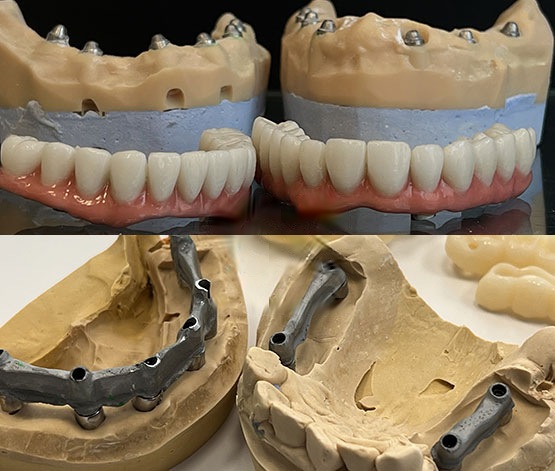
- Prosthetic work on implants
- Bruxism guards and retainers
- Clear aligners for orthodontics
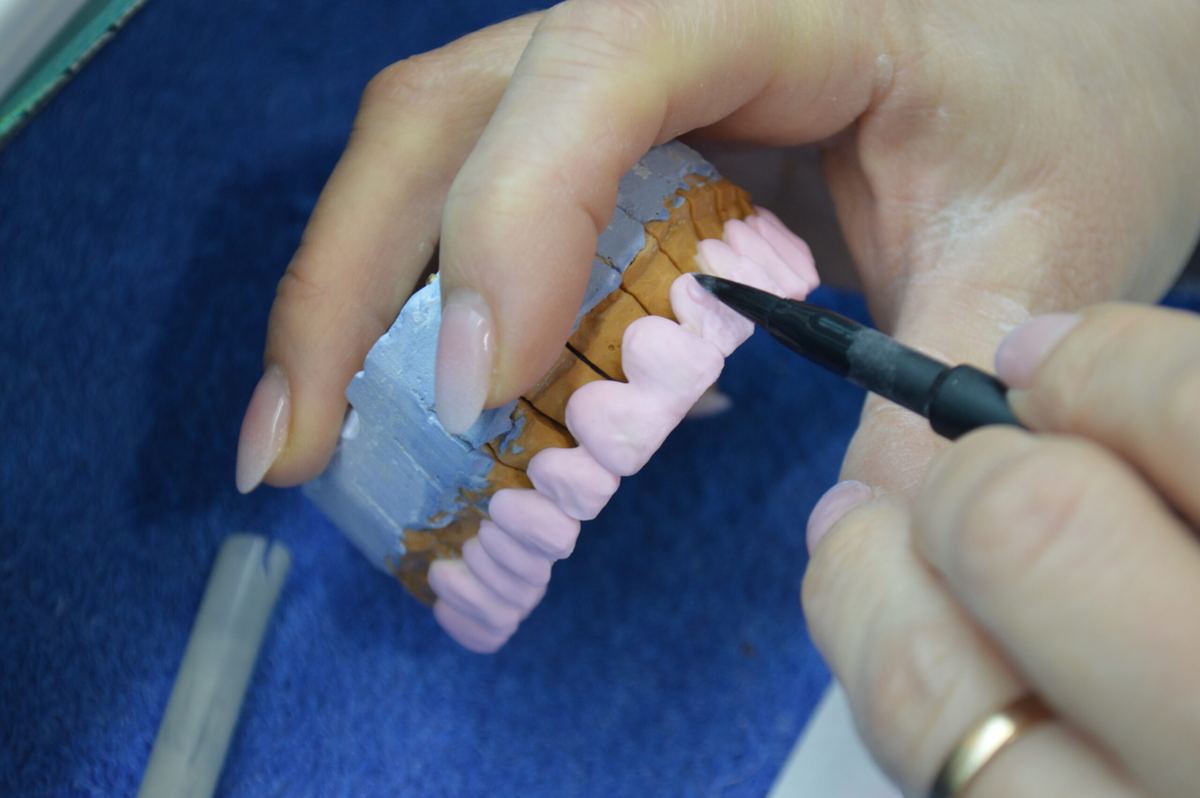
A brief overview of the working process
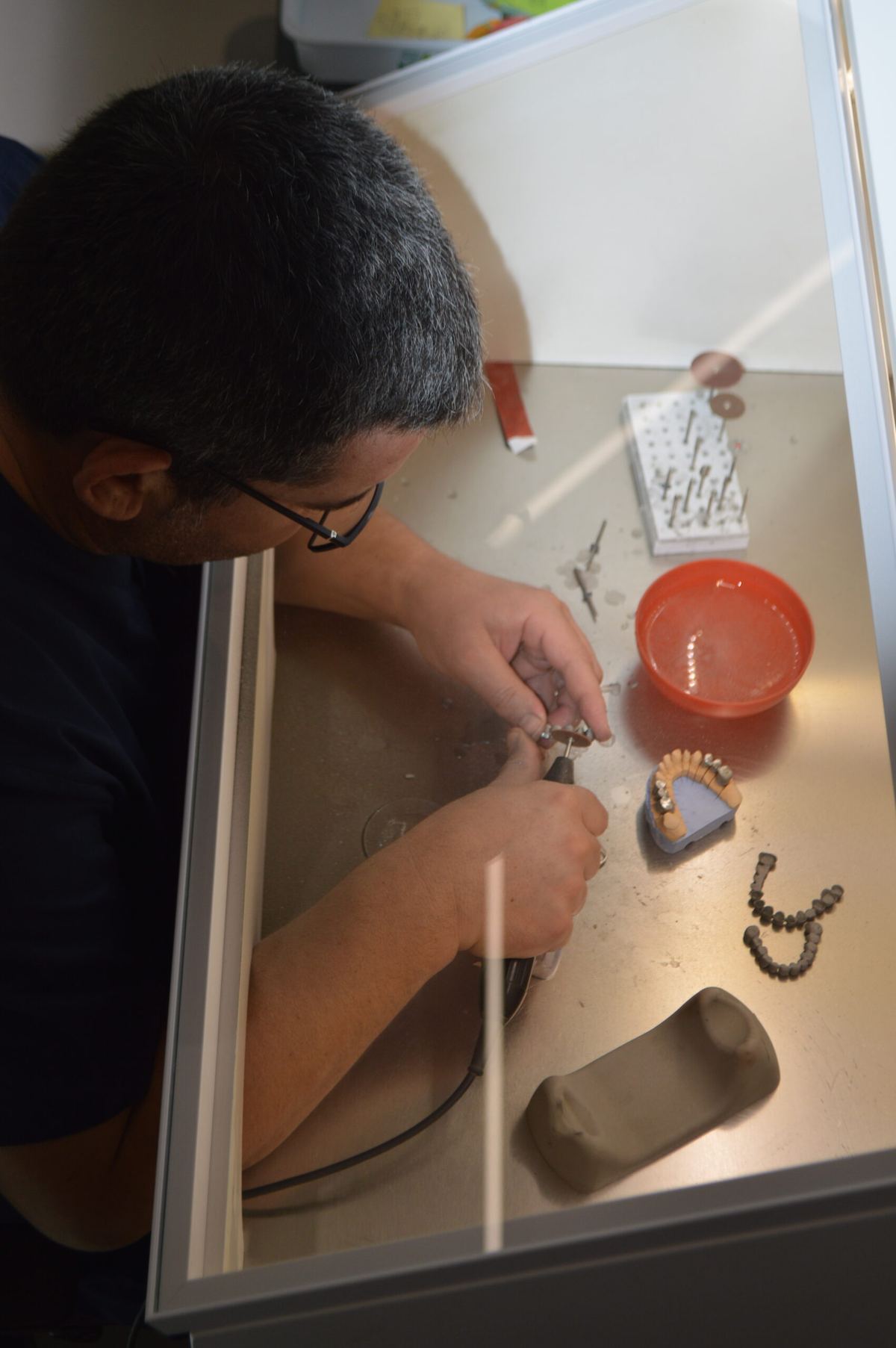
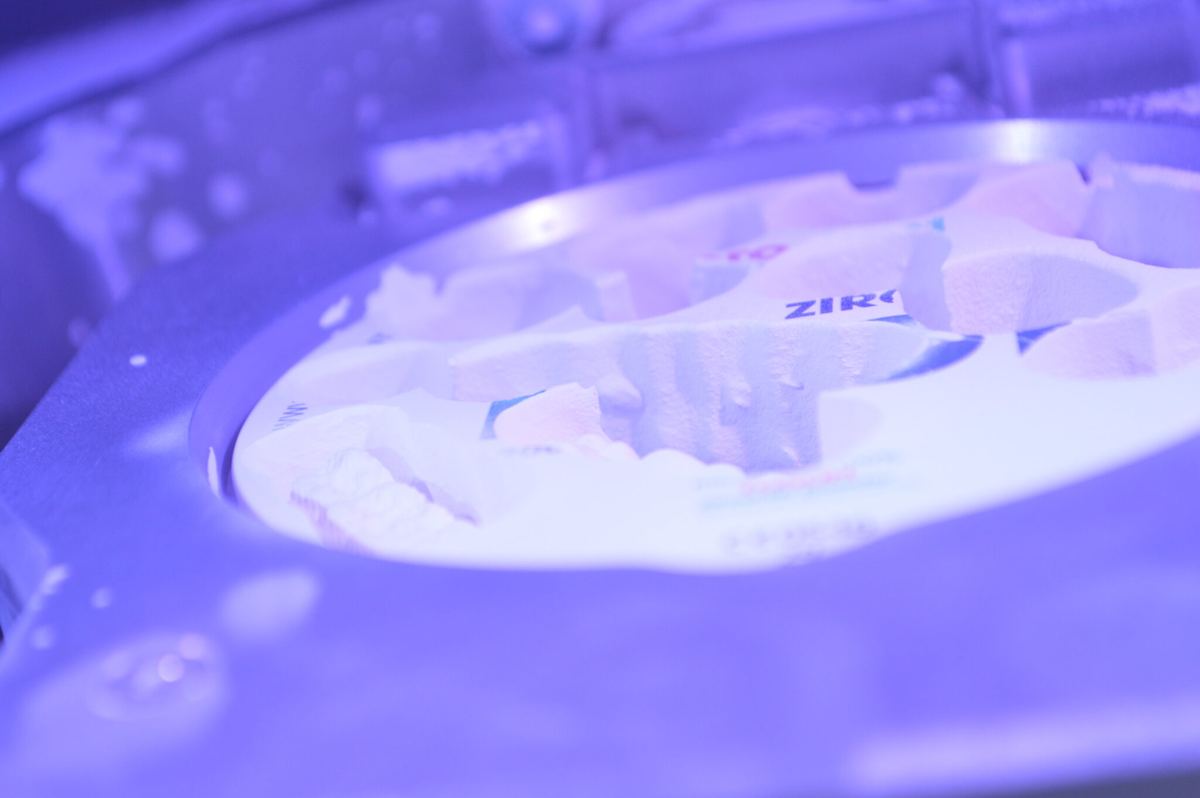
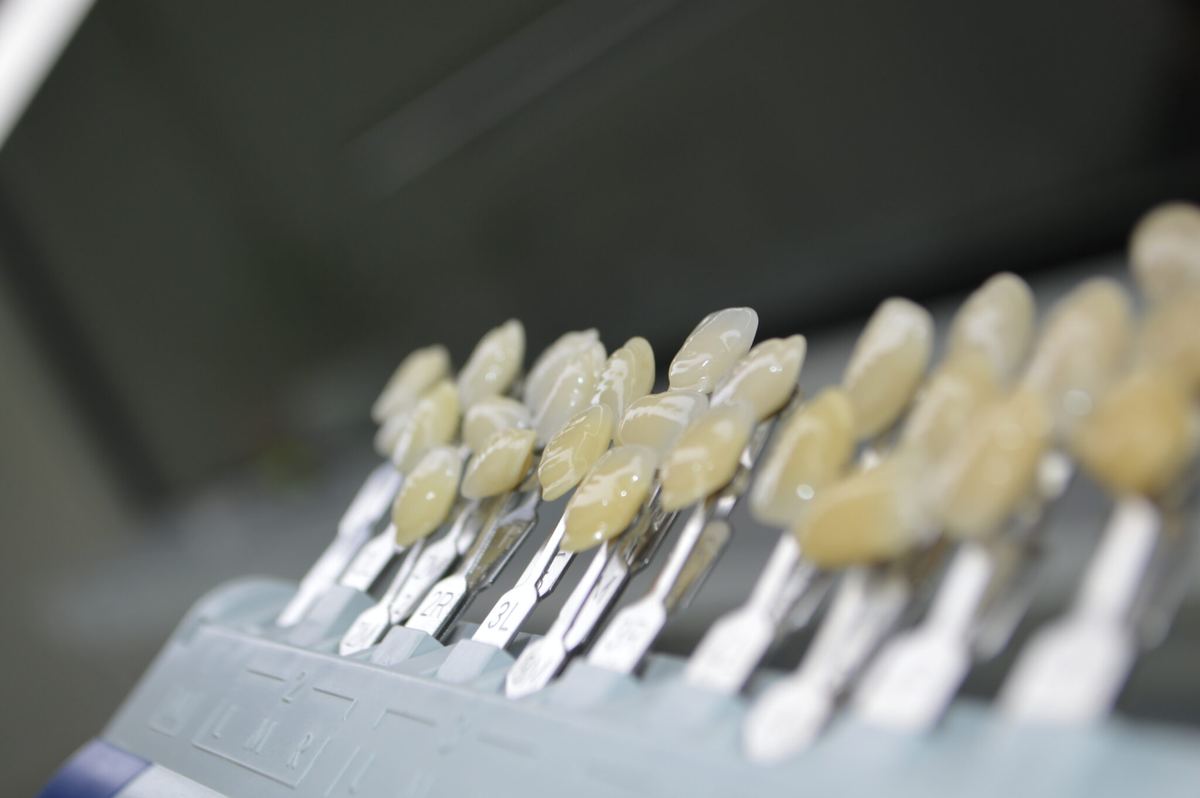
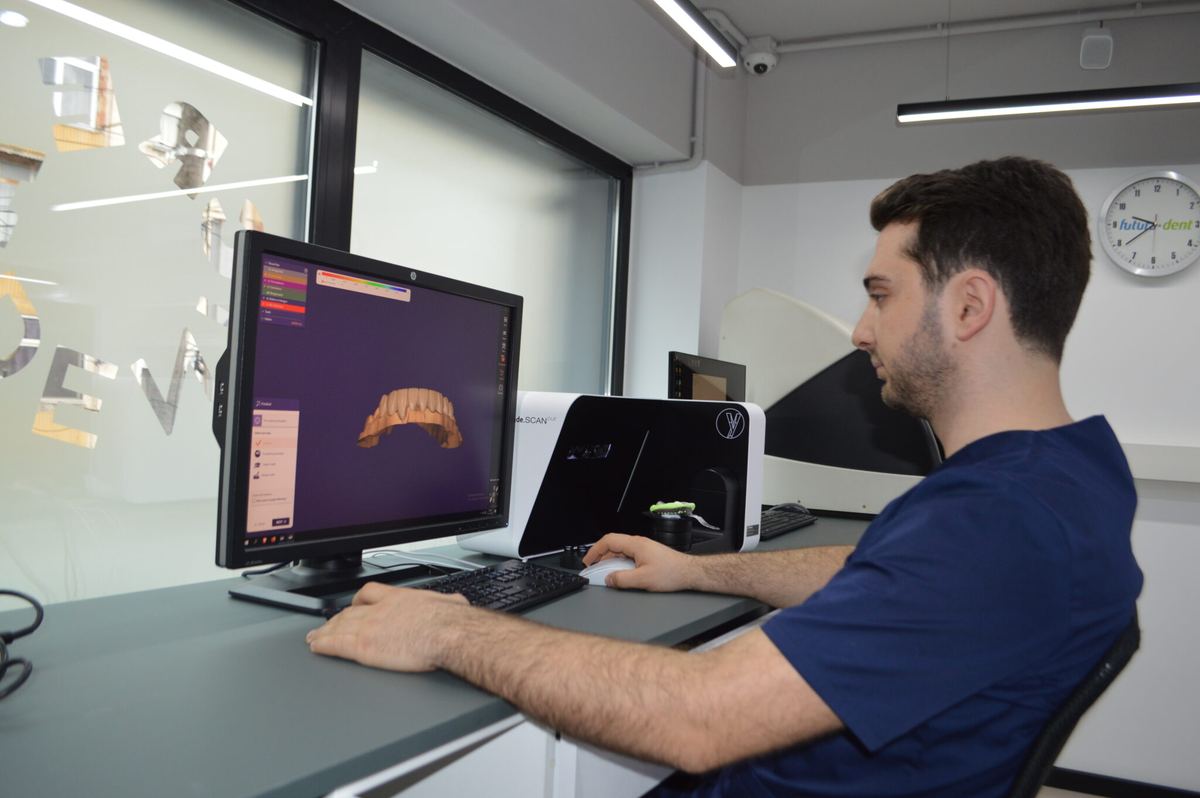
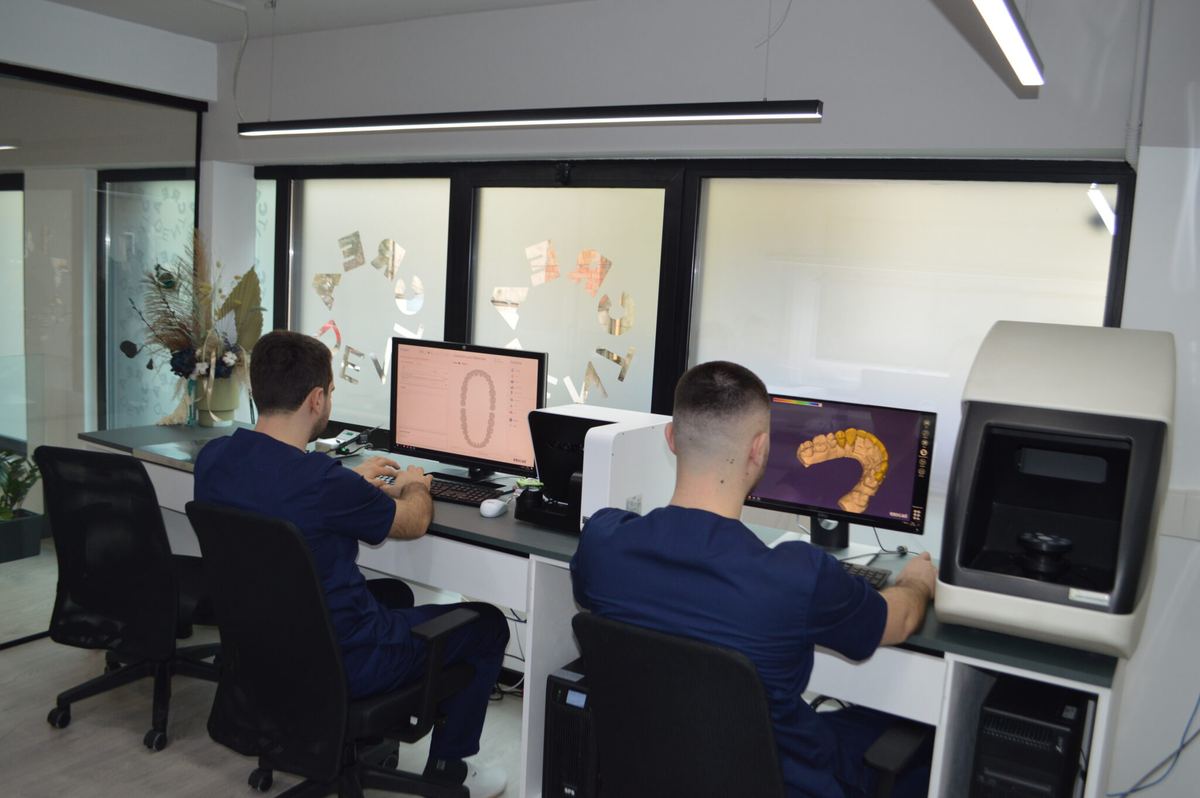
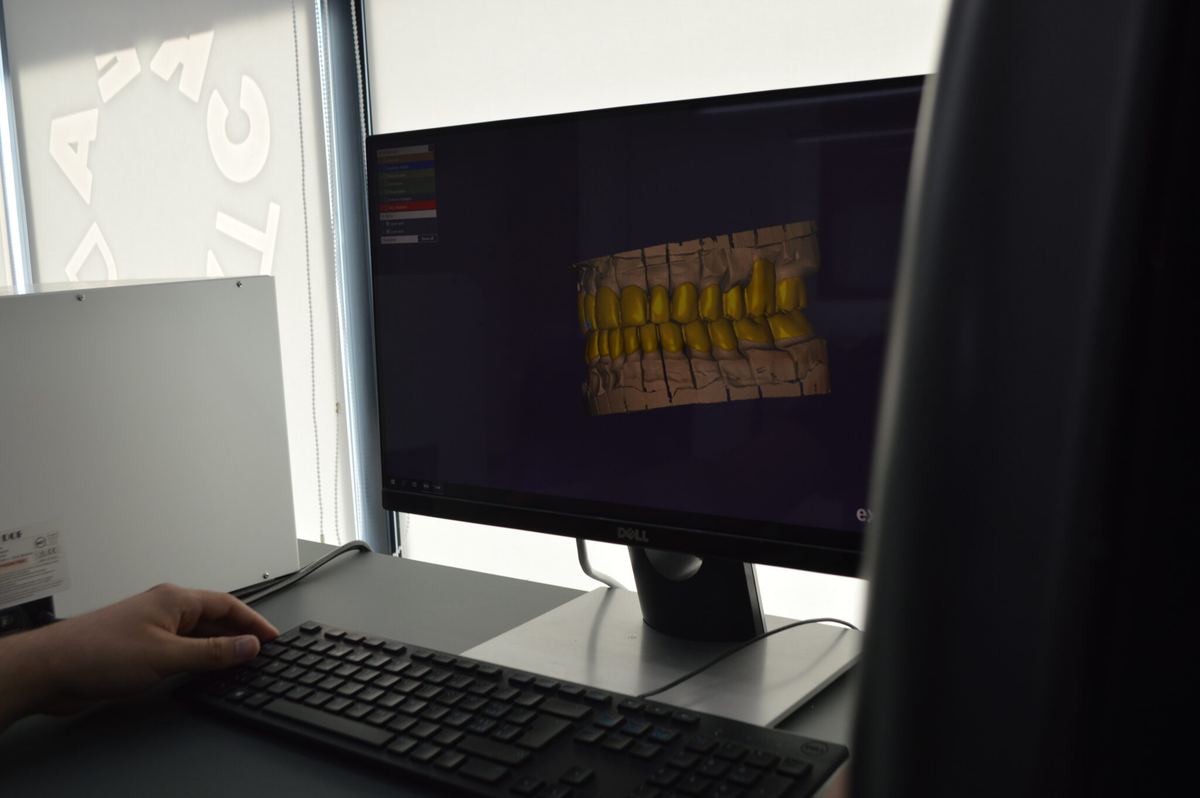
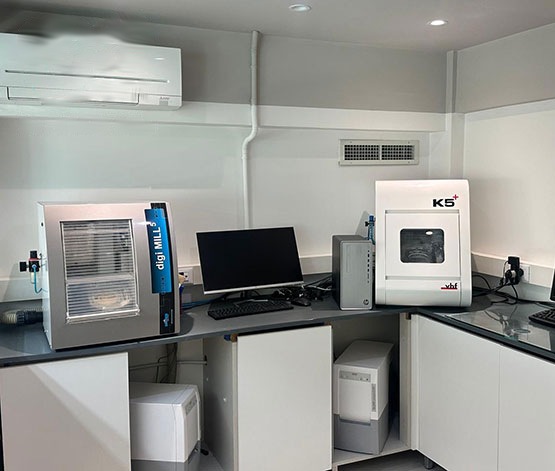
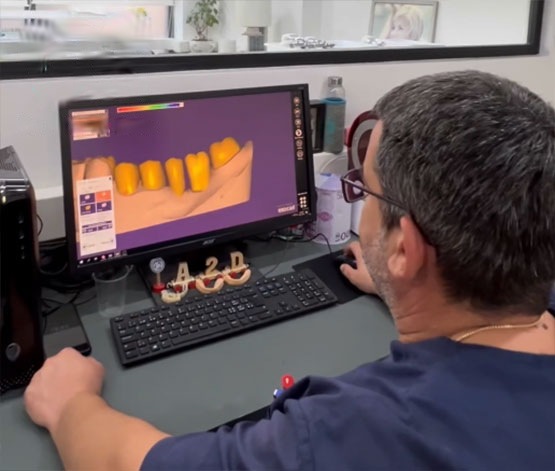
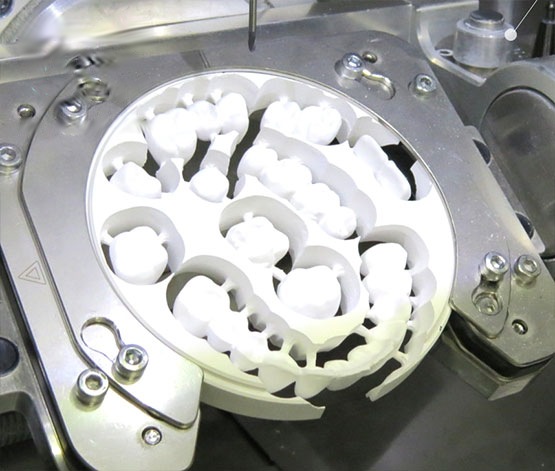
Partial and full arches are designed on the computer from the digital scan or the impression. The 5-axis milling machines cut the teeth in zirconia or in alloy, the furnaces fire them for hardness and strength, and the finishing and polishing are done by hand. Because the laboratory is inside the clinic, the technician can be present at the fitting and correct the work in the chair.
Inside the laboratory
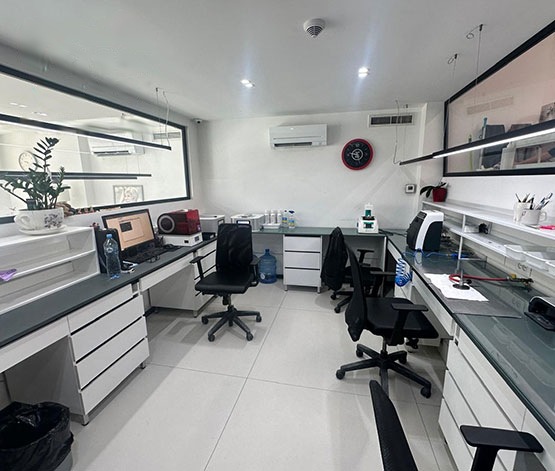
The laboratory rooms
Frequently asked questions
Why does it matter that the dental laboratory is inside the clinic?
Because the days and the fittings depend on who makes the prosthesis: with the technicians in the building, a crown, several crowns or a bridge usually take four to six days, the technician can be present at the fitting, and a correction is made in the chair, with nothing sent to an outside laboratory.
What does the laboratory make?
Zirconia and metal-ceramic crowns, E-max veneers, prosthetic work on implants, removable and skeletal prostheses, custom abutments, bruxism guards and retainers. The design is digital, the 5-axis milling machines cut the zirconia, and the finishing and polishing are done by hand.
Who checks the laboratory's work?
The dentist who treats you: every prosthesis is tried in the mouth before it is delivered and, if needed, goes back to the laboratory the same day.