


Home Dental Prosthetics
Dental Prosthetics
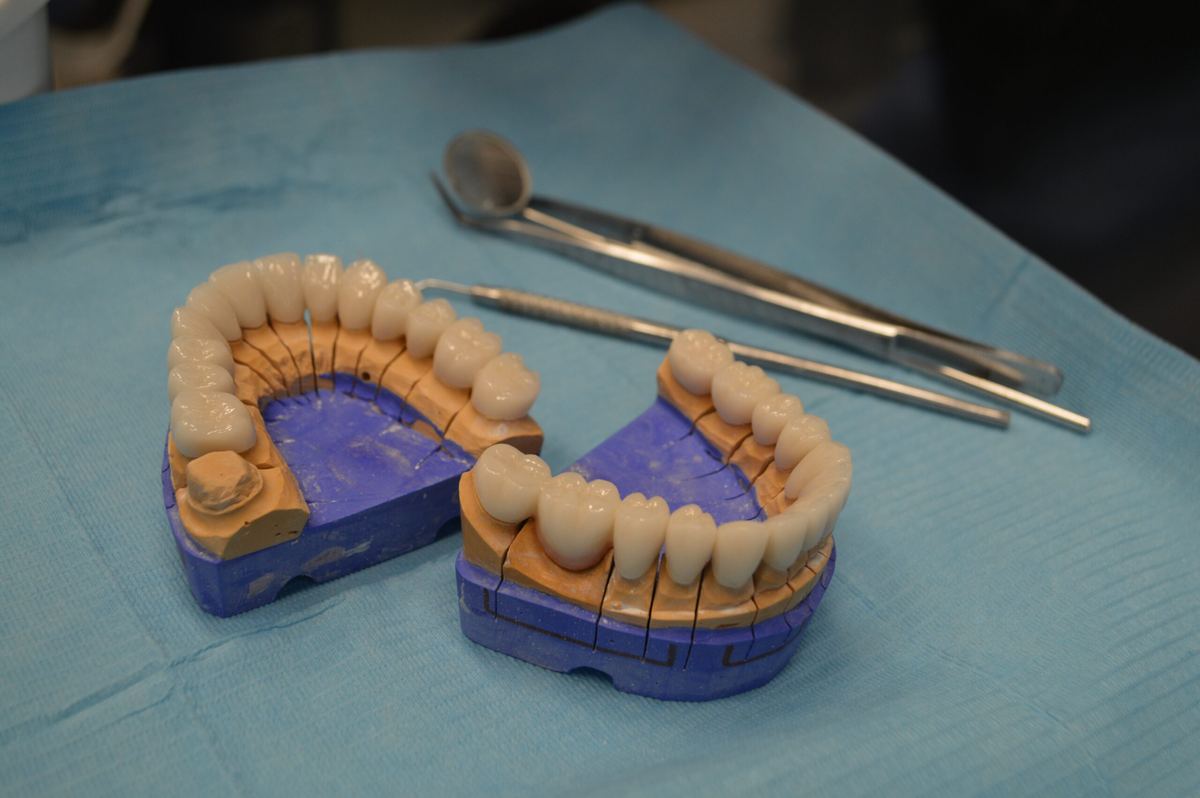
Crowns, bridges and fixed or removable dentures: made by the laboratory inside the clinic and tried in the chair, with no courier and no waiting.
- Crowns and bridges in 4-6 days
- Full arches in 6-7 days
- The technician checks the work in the mouth whenever needed
 Crowns, bridges and dentures
 How the quote works
 Dental Tourism
5.0184 reviewsThe clinic’s Google profile,
Who does it here
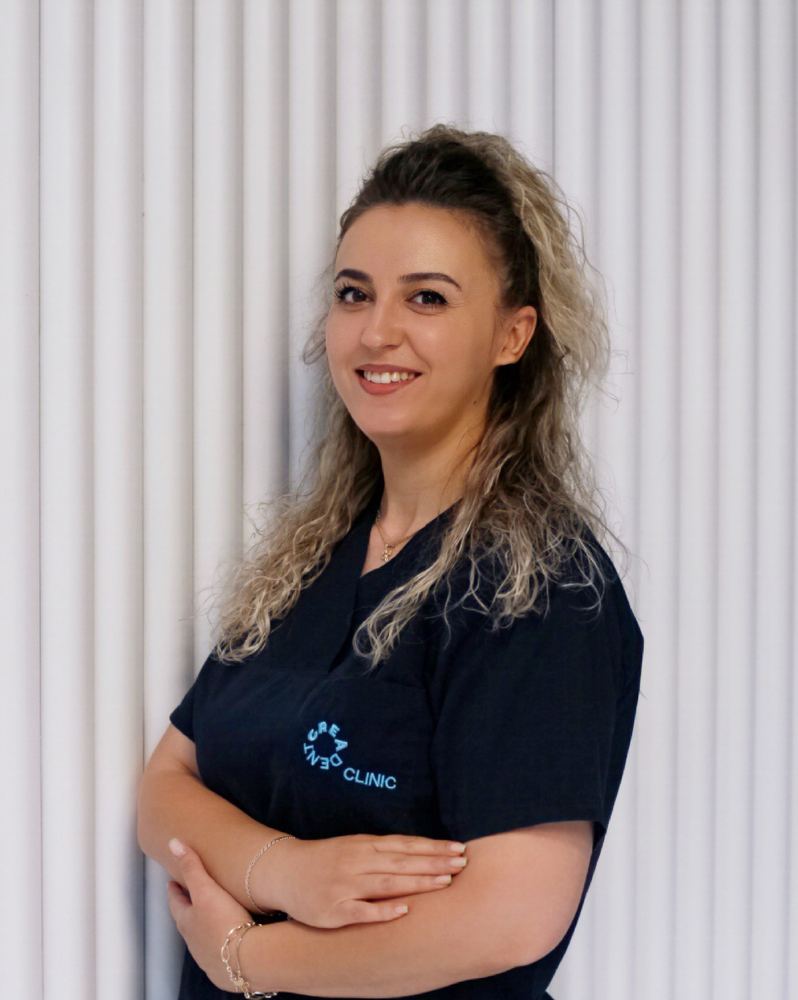
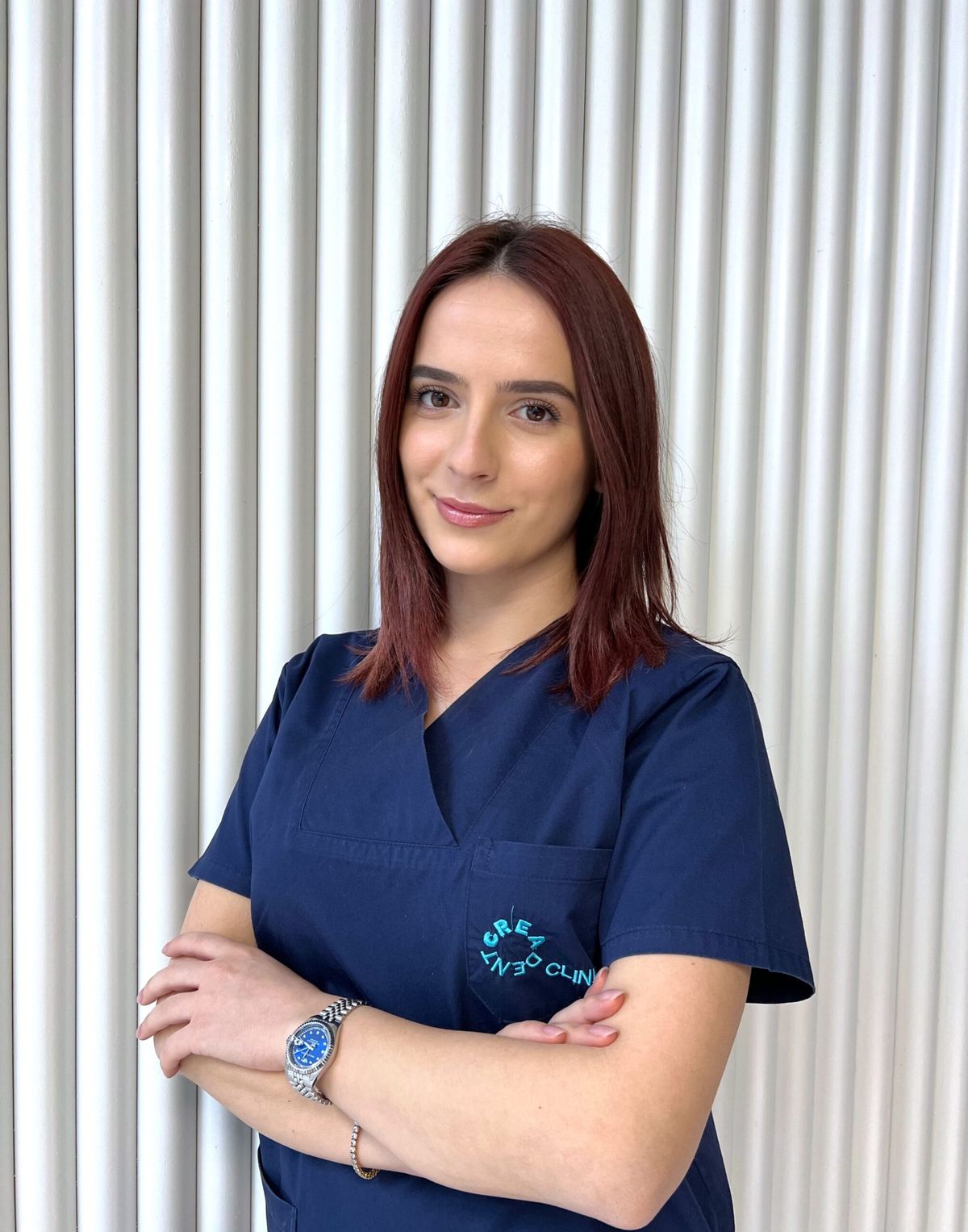
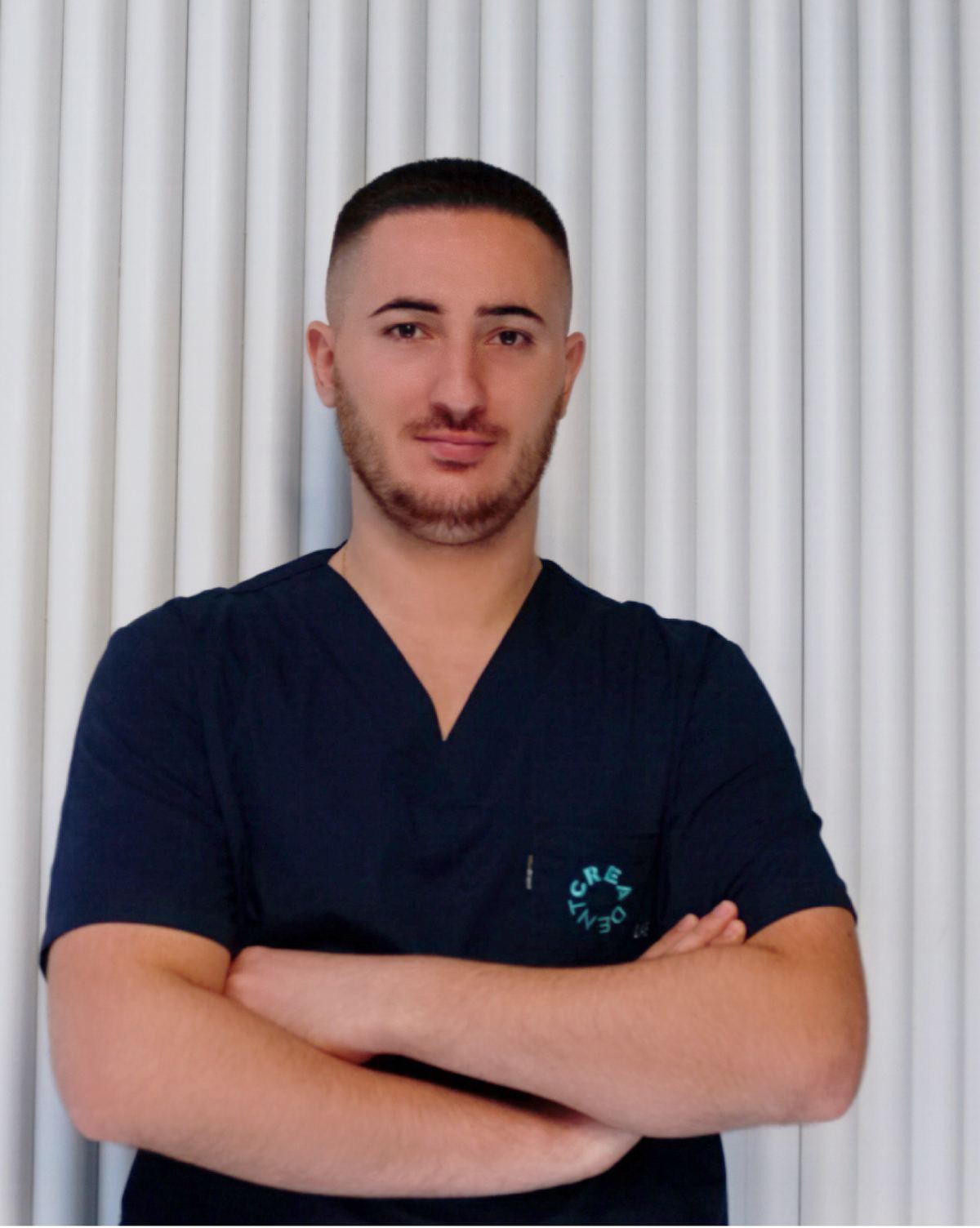
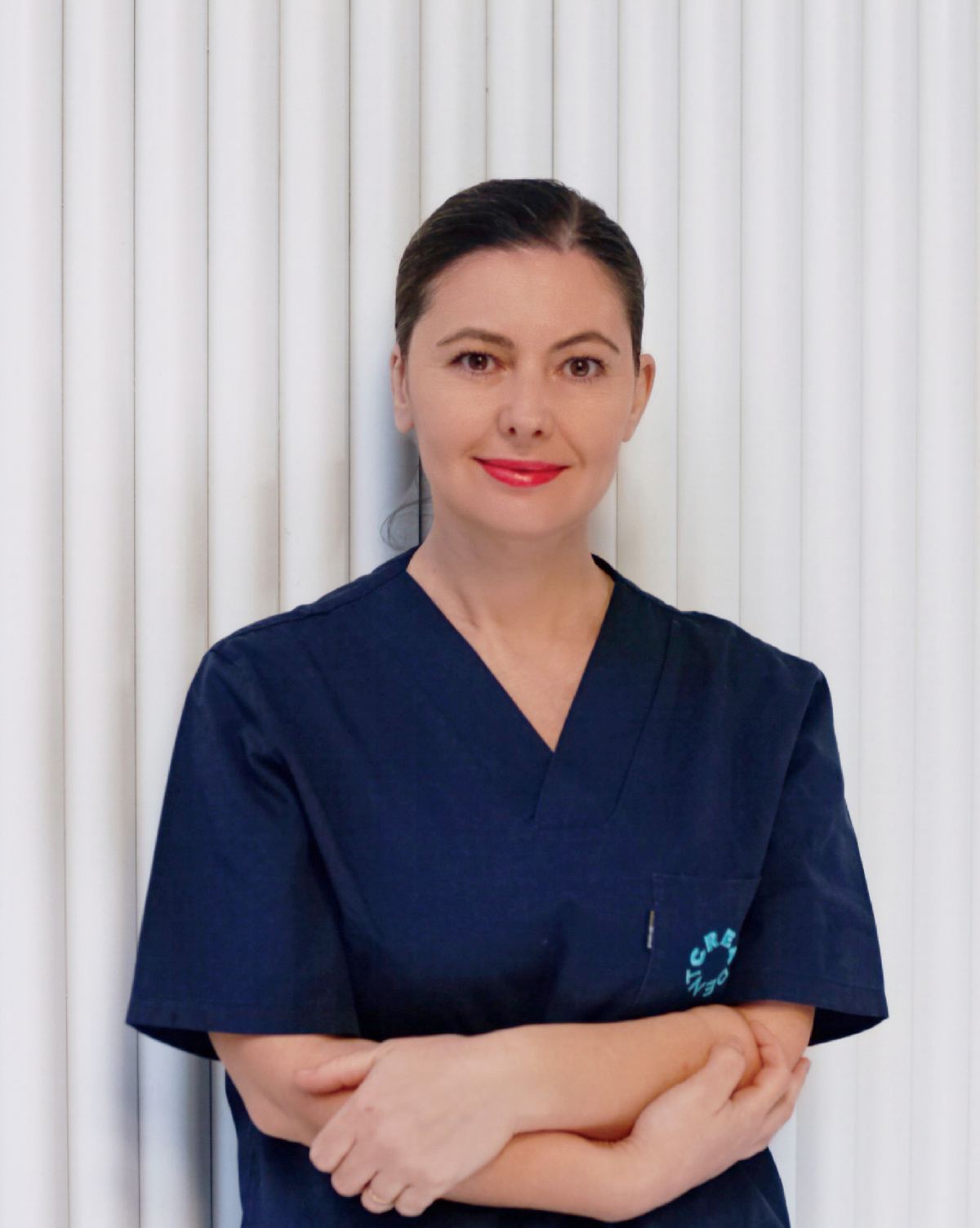
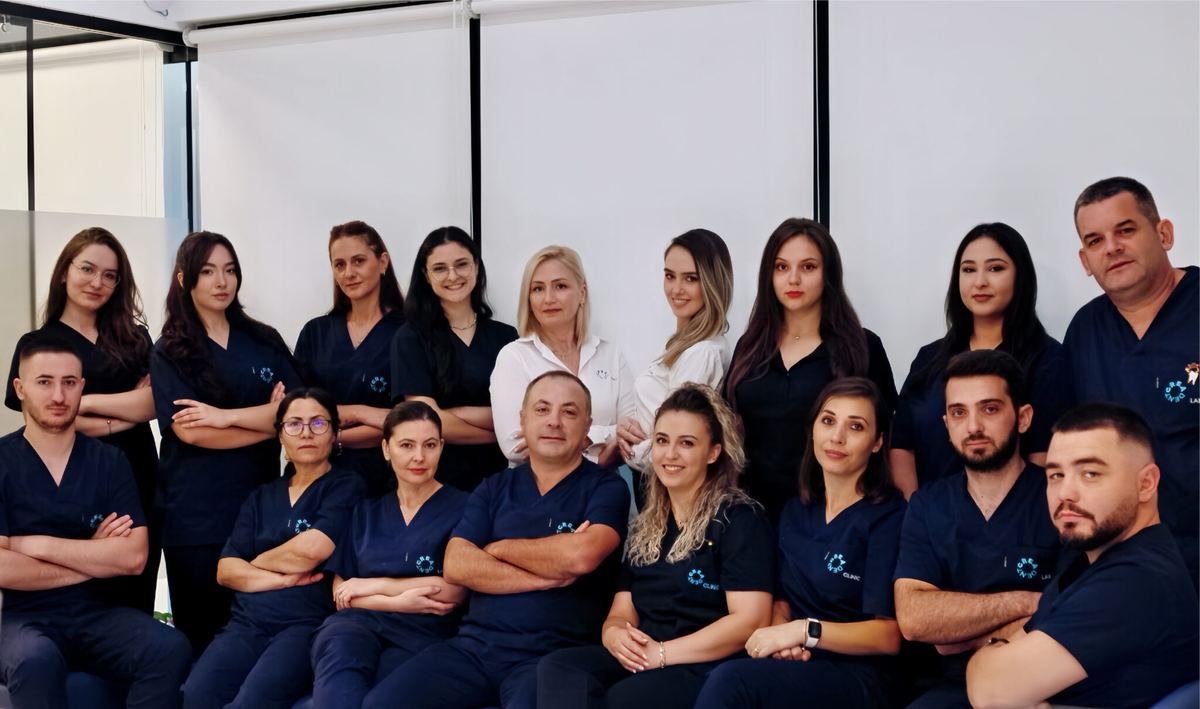
Five dental technicians work in the laboratory inside the clinic, in shifts, because the prosthetics stay in the furnaces for hours and have to be taken out at the right moment.
How it runs here
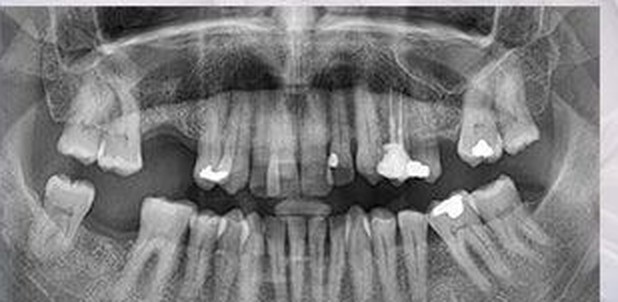
- The diagnosis from the panoramic X-rayFrom the 2D panoramic X-ray we decide whether the tooth can take a crown, whether a bridge or a denture is needed, and whether it must first be root-treated or rebuilt. first visit
- Preparation and impressionThe tooth is prepared and the impression is taken with the digital scanner or with impression material. one session
- Computer designCrowns, bridges and arches are designed on the computer for your case. one day
- ProductionThe 5-axis milling machines cut the structure in zirconia or alloy; the furnaces fire it; the ceramic is layered and polished by hand. 2-4 days
- Try-in and deliveryTry-in in the chair, immediate adjustments in the laboratory, cementing or screwing in. 1-2 sessions
With what
- Structure
- Zirconia (Zirkonzahn Prettau, Ivoclar ZirCAD, Katana, VITA YZ and others), cobalt-chrome alloy free of nickel and beryllium, cast or milled; noble or palladium alloy on request; titanium for structures on implants.
- Veneer
- Ceramic layered on zirconia (Ivoclar e.max Ceram, VITA VM 9, Noritake CZR) or on metal (Ivoclar, VITA, Dentsply, Kulzer metal-ceramic).
- Full ceramic
- Emax lithium disilicate and feldspathic ceramics for single crowns and veneers, where aesthetics matters more than load.
- Removable prosthetics
- Complete and partial resin dentures with Ivoclar, VITA or Candulor teeth; cobalt-chrome framework dentures, including with attachments; CAD/CAM milled bases.
- Temporaries
- Milled PMMA (Zirkonzahn, VITA, Ivoclar), colour-stable, or traditional acrylic resin.
The written quote states, for each element, the structure and the veneer with the manufacturer's name: it is the document the laboratory makes your work from.
For whom
- For people with a broken, root-treated or heavily filled tooth: a crown protects it.
- For people missing one or more teeth who do not want or cannot have implants: a bridge or a framework denture.
- For people with a denture that moves and who want a more stable prosthesis.
- For people with old metal-ceramic crowns who want zirconia.
The clinic on video
The laboratory inside the clinic, where your crowns and prosthetics are made.
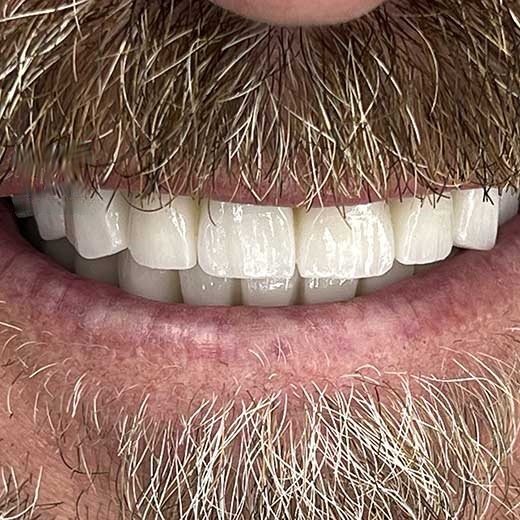
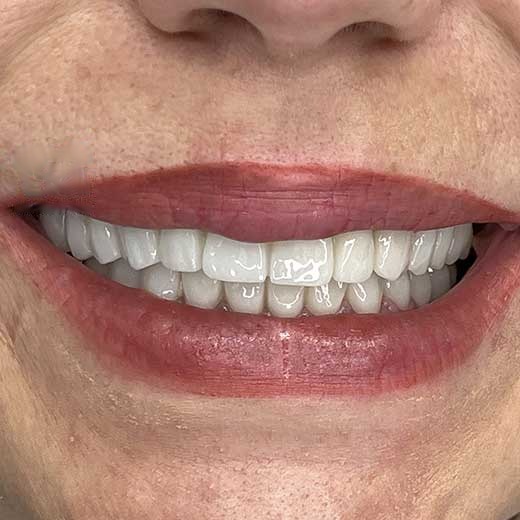
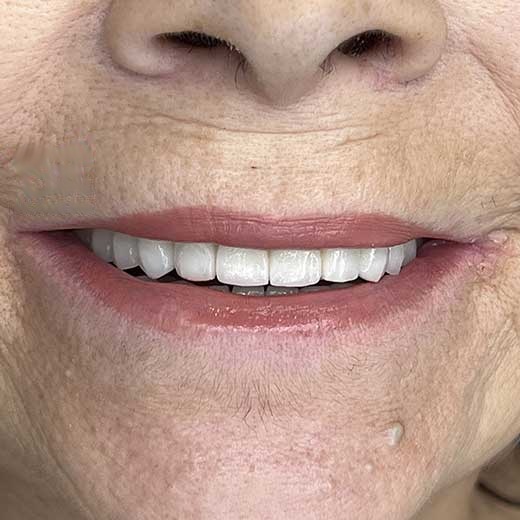
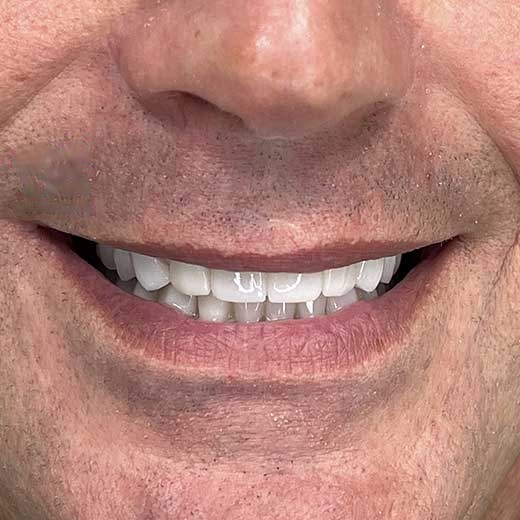
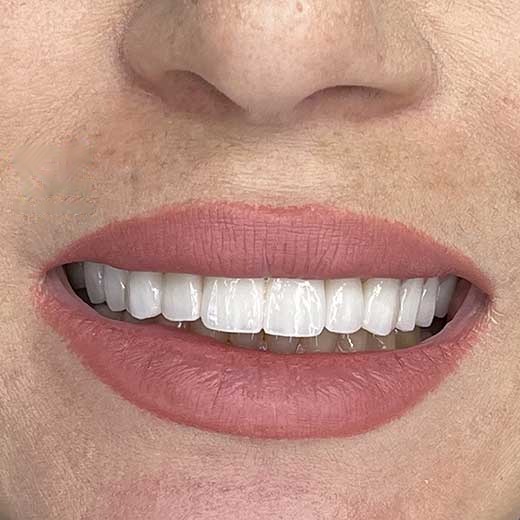
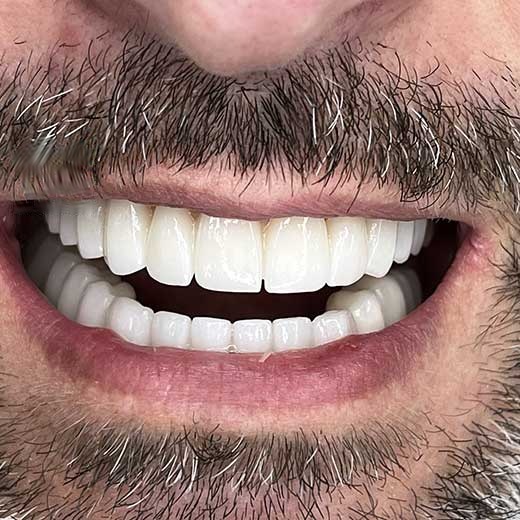
Dental prostheses and veneers improve the look of the smile and the way it works. A prosthesis replaces missing teeth, made to measure, restoring the natural appearance and the ability to chew. Veneers correct aesthetic defects such as stains or cracks.
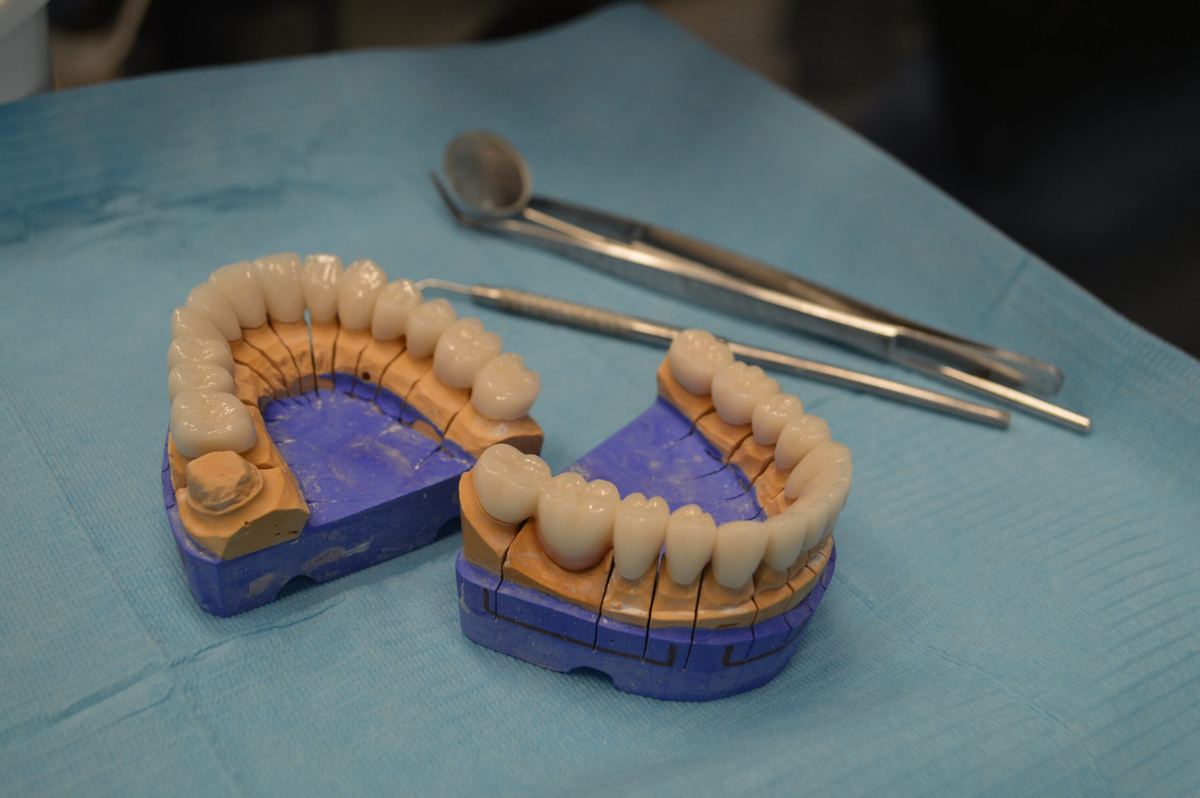
All of it is designed digitally and made in the laboratory inside the clinic, which means fittings in the chair with the technician present, and no external step in between.
Our offerings include
- Metal-ceramic crowns4–6 days
- Zirconia crowns4–6 days
- E-max crowns4–6 days
- E-max veneers4–6 days
- Fixed or removable prostheses4–6 days
- Fixed metal prostheses4–6 days
- Complete removable prostheses4–6 days
- Complete resin prostheses4–6 days
- Skeletal prostheses, fixed or removable4–6 days
- Custom abutments, in alloy or zirconia4–6 days
Crowns and bridges on your own teeth
The most common dental bridges are of 3 or 4 teeth, but a bridge can reach 12 teeth, practically a whole arch. Bridges on teeth have no supporting implants: they rest on the existing teeth, whether healthy, rebuilt or devitalised. The procedure involves preparing the teeth to make the space where the crown or bridge sits; then the impression is taken and the prosthesis is made, and it is cemented onto the prepared teeth, restoring chewing and appearance.
In the simplest cases a single tooth is capped — for example a central incisor that is broken or has deep decay. In the more complex ones, with many teeth missing on the same arch, a long bridge is built and cemented onto the remaining teeth. A full-arch bridge is also used for people who grind their teeth at night and have worn teeth.
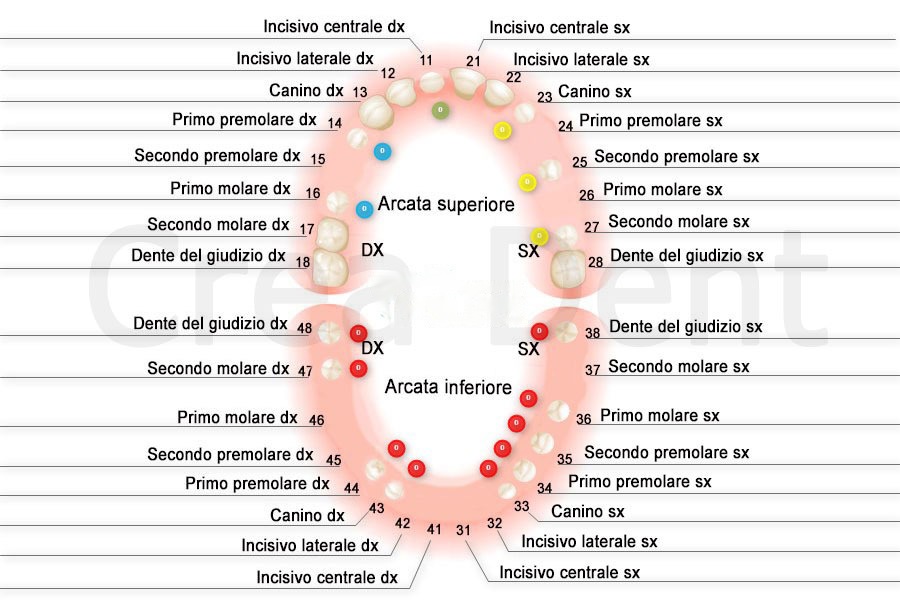
The diagram, case by case
If the upper right second premolar is missing, the first premolar and the first molar are prepared and a three-unit bridge is cemented onto the two. If two teeth that are not next to each other are missing, the bridge extends over the teeth that remain. The diagram alongside shows these combinations: which tooth is missing, which teeth carry the bridge, how many units are needed.
Zirconia, E-max, metal-ceramic
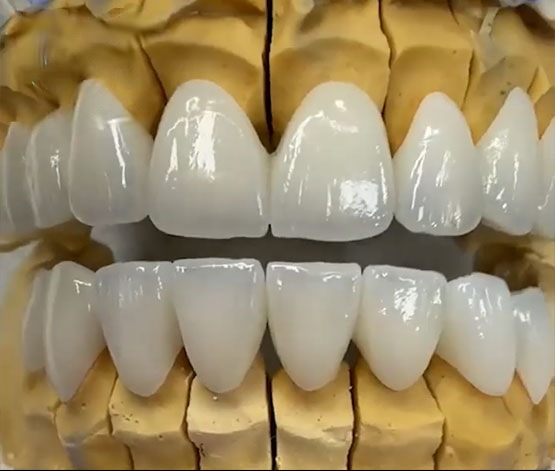
Zirconia carries no metal, so it does not cause the gum to pull back and expose a dark collar over time, it does not transmit heat and cold to a prepared tooth, and it lets light through the way a natural tooth does.
Metal-ceramic is still the right choice in some cases, and E-max in others, particularly in the front. Which material fits your case is decided at the consultation, on the X-ray and on the state of the teeth that are still there.
Fixed and removable
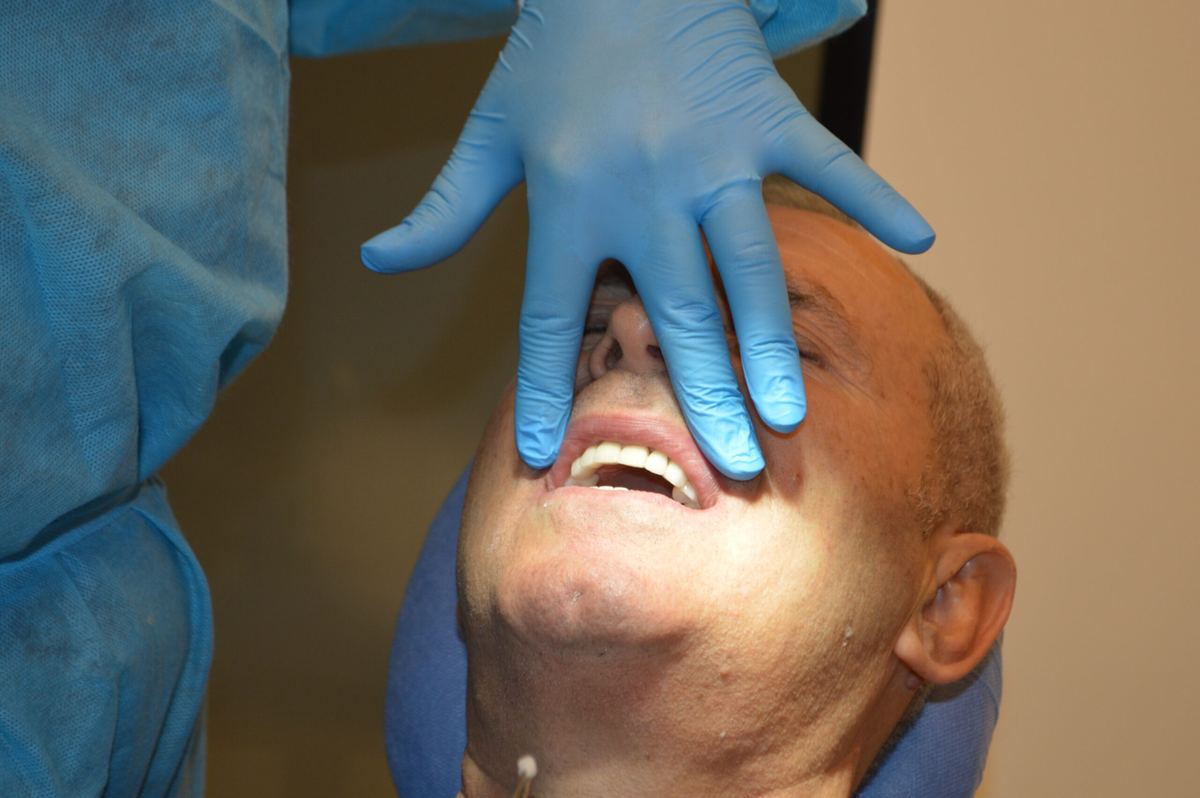
Where there are still enough teeth or implants to carry the work, the prosthesis is fixed. Where there are not, a removable one — skeletal, flexible, or a full resin prosthesis — restores the bite and the face. Temporary arches in PMMA are made straight away, so nobody is left without teeth during the treatment.
Made here, fitted here
All the prostheses are made in the clinic’s laboratory: design on the computer, 5-axis milling, firing, finishing and polishing by hand. This means the fitting is done in the chair and the correction goes straight back into production, without going through an outside supplier or adding days of waiting. The technician can come and look at the work in the mouth when there is any doubt.
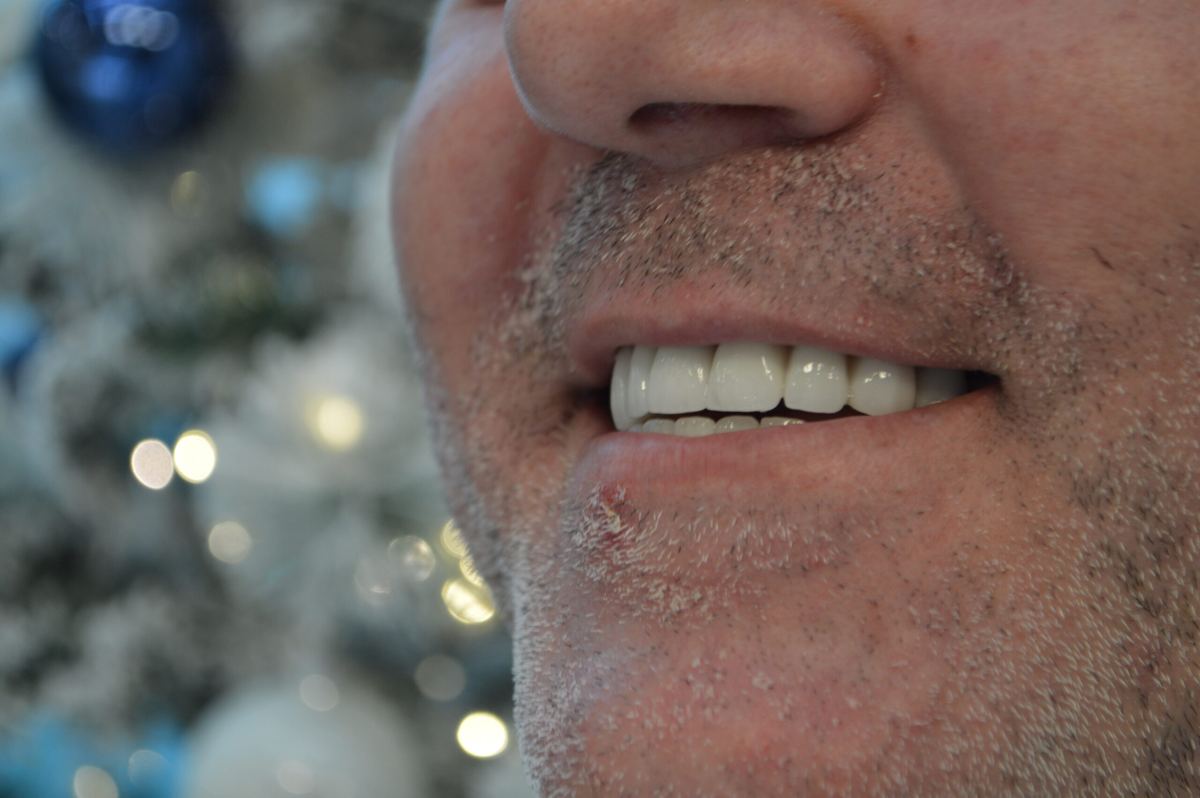
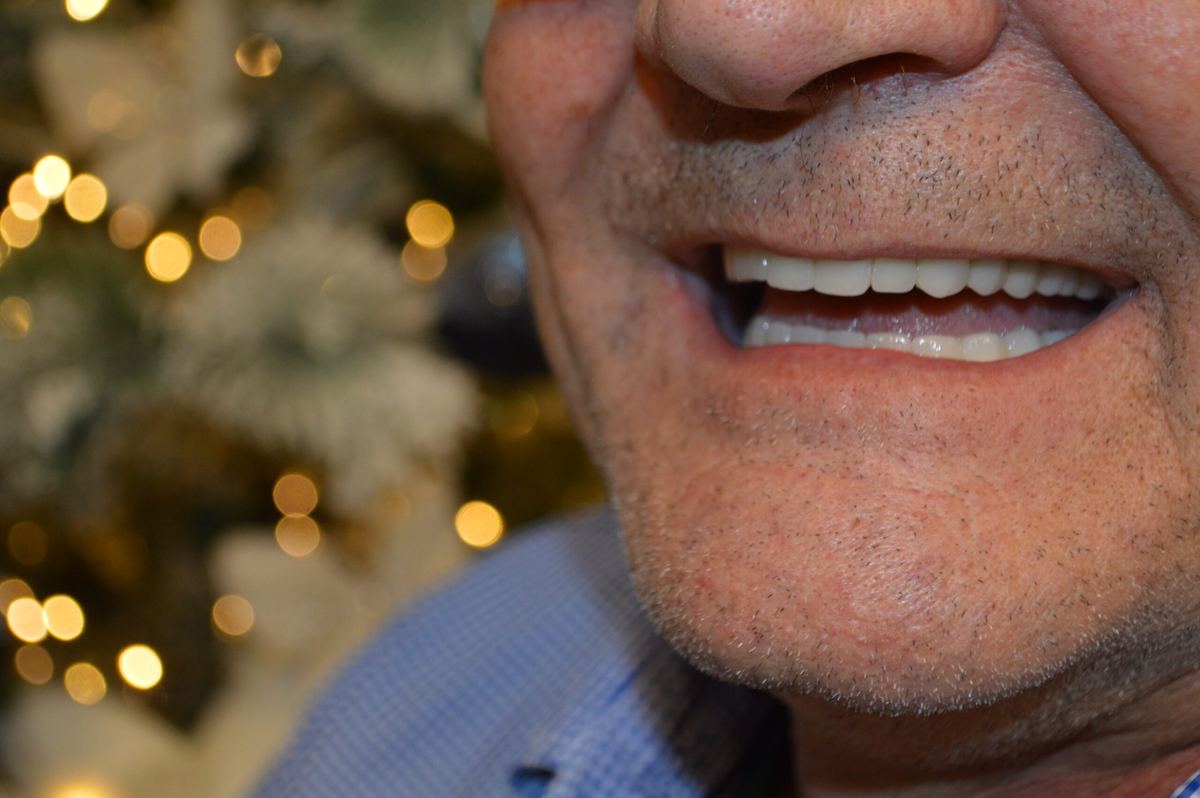
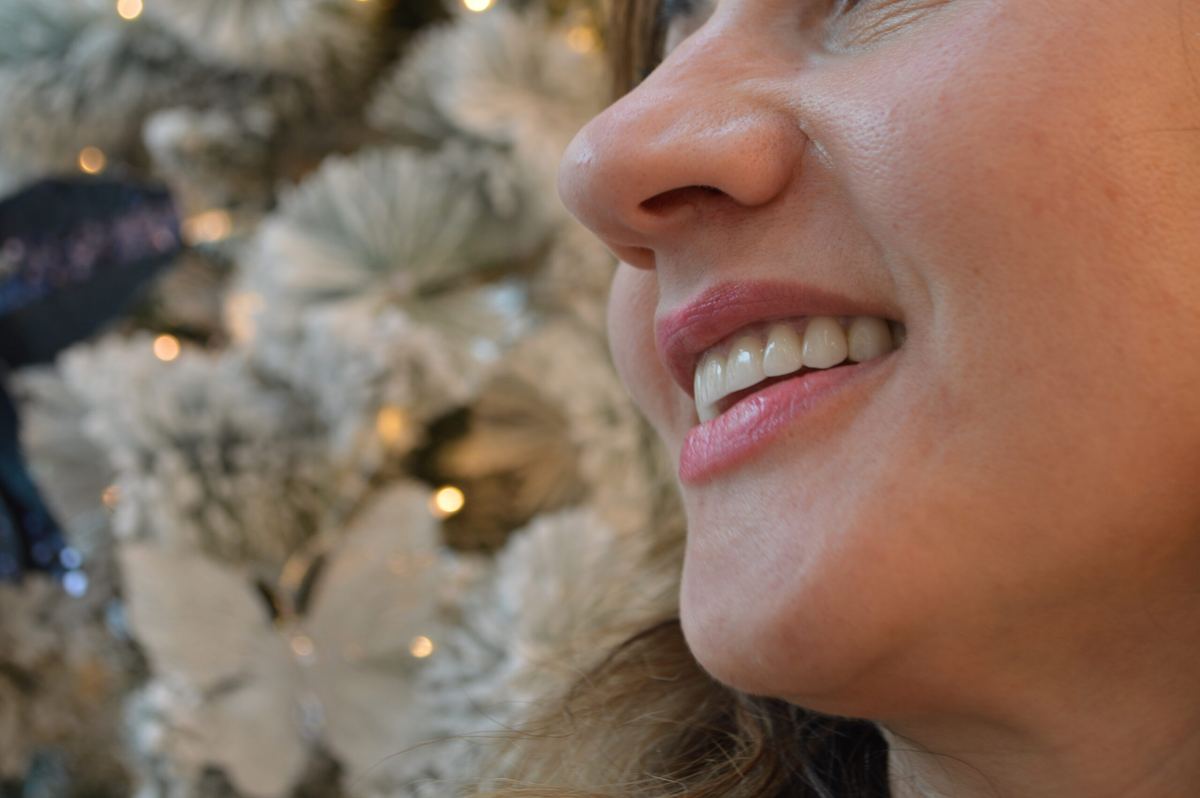
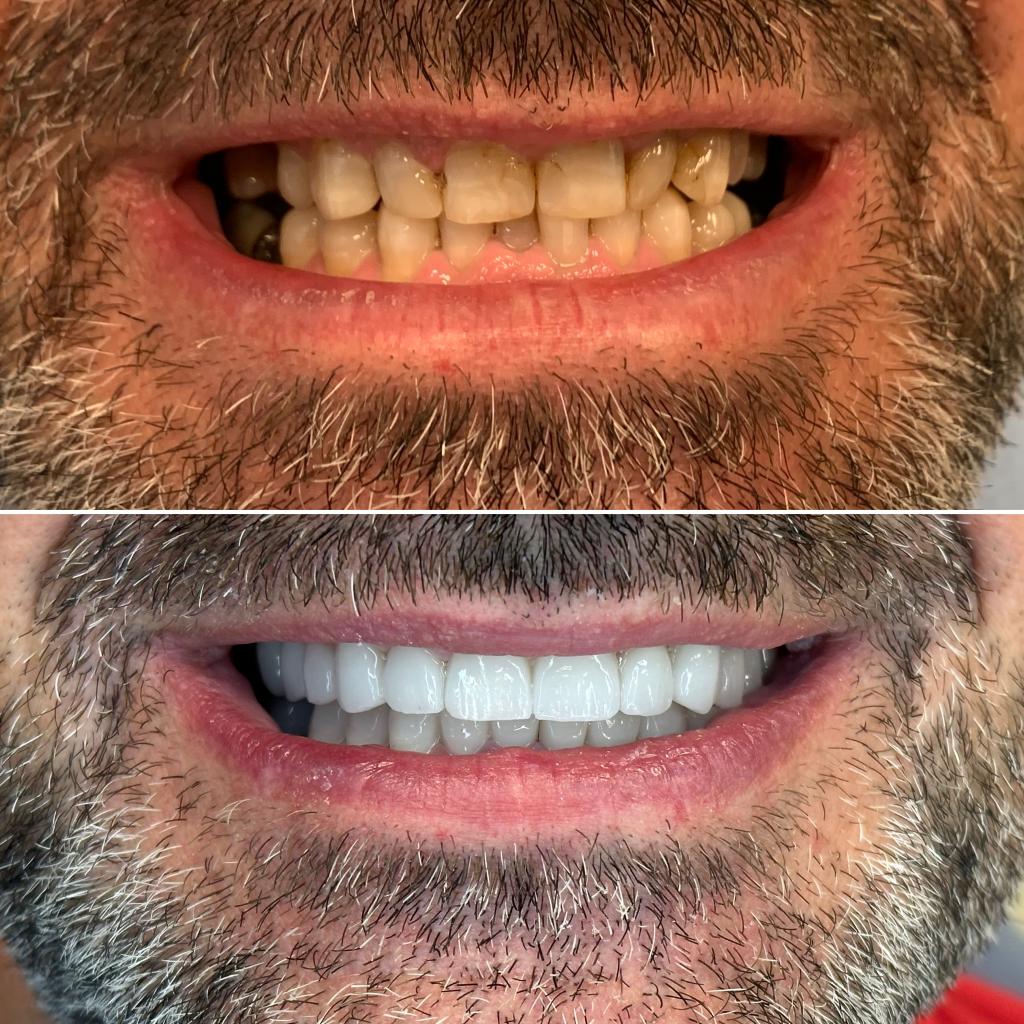
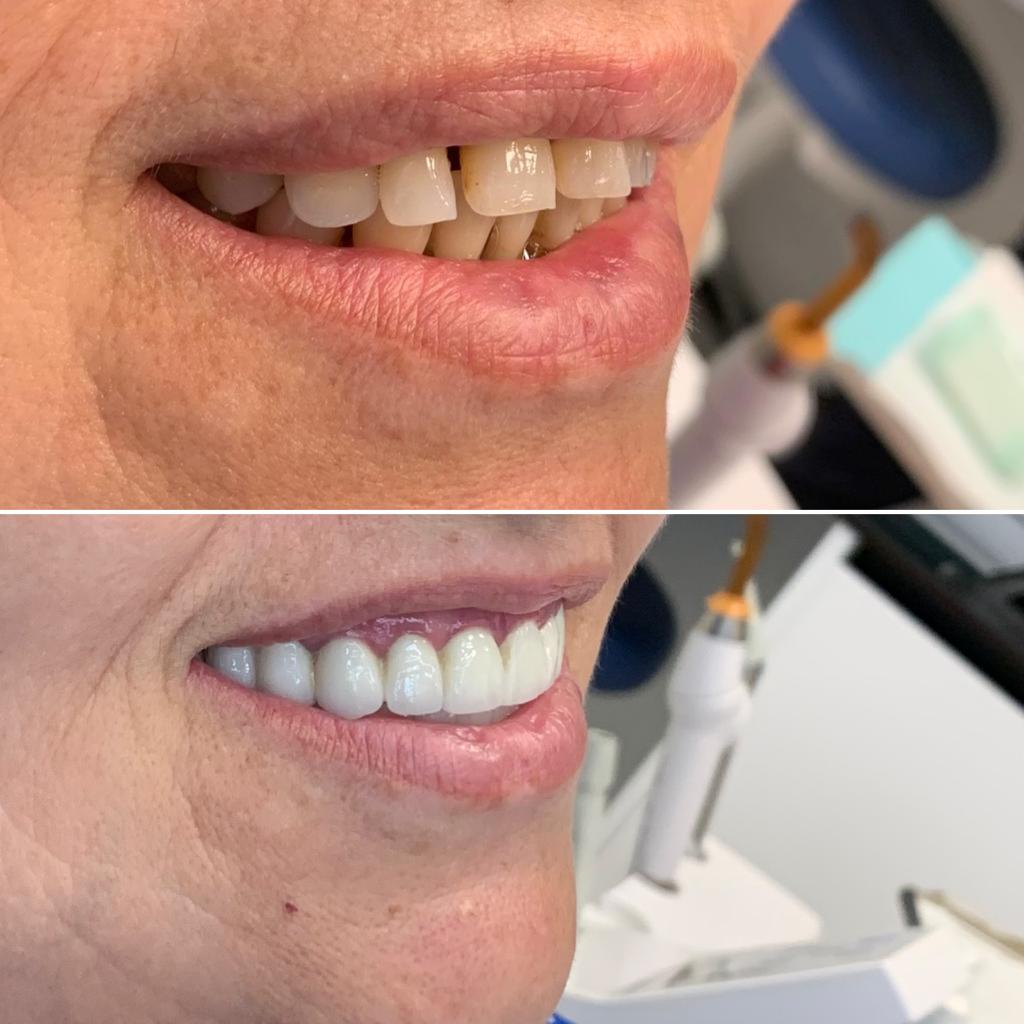
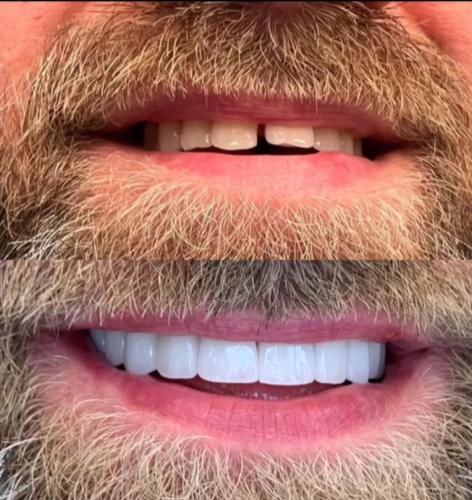
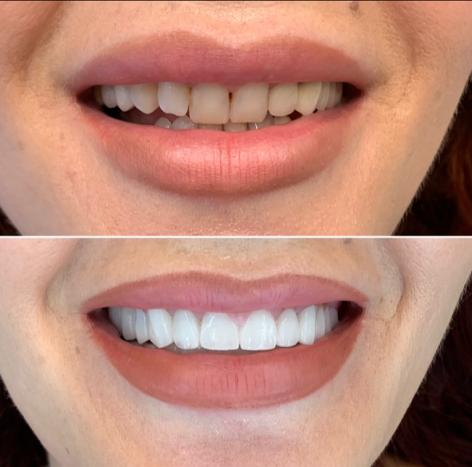
Treated cases
Frequently asked questions
How much does a dental crown cost in Albania?
It depends on the material (zirconia, E-max, metal-ceramic) and on the tooth to be restored. The clinic's price list for crowns, bridges and dentures is on the Prices page, and the written quote names the material, the steps and the days.
Fixed or removable prosthesis: what is the difference?
A fixed prosthesis is cemented or screwed onto natural teeth or implants and is not taken out; a removable prosthesis is taken out for cleaning. Which one fits your case is decided at the consultation, on the X-ray and on the state of the teeth that are still there.
How many days does a dental crown take?
A crown, several crowns or a bridge usually take four to six days, because the dental laboratory works inside the clinic: the fitting is done in the chair and a correction goes straight back into production.
Can all my teeth be redone?
It starts from the 3D CT scan and the examination: the dentist decides with you whether the base is your own teeth or implants, and the trips are planned. New arches on your own teeth take six to seven days; on implants there are two trips, the first for the surgery and the temporary arch, the second for the final arch.
How do fixed teeth on implants work?
The implants act as roots and the fixed prosthesis, a bridge or a full arch, is screwed onto them: it is not taken out. The laboratory inside the clinic makes it and adjusts it with you in the chair, and the written quote gives the trips needed.