


Home Implantology
Dental implants in Albania
Single implant, bridges on implants, All on Four and All on Six: the 3D CT scan, the surgery and the prosthesis in the same clinic, with the dental laboratory inside the building.
- 3D CT scan at the clinic before every implant
- Prostheses on implants made by the in-house laboratory
- Two trips: the surgery, then the final prosthesis
 How the quote works
 Dental Tourism
 Patient reviews
5.0184 reviewsThe clinic’s Google profile,
Who does it here
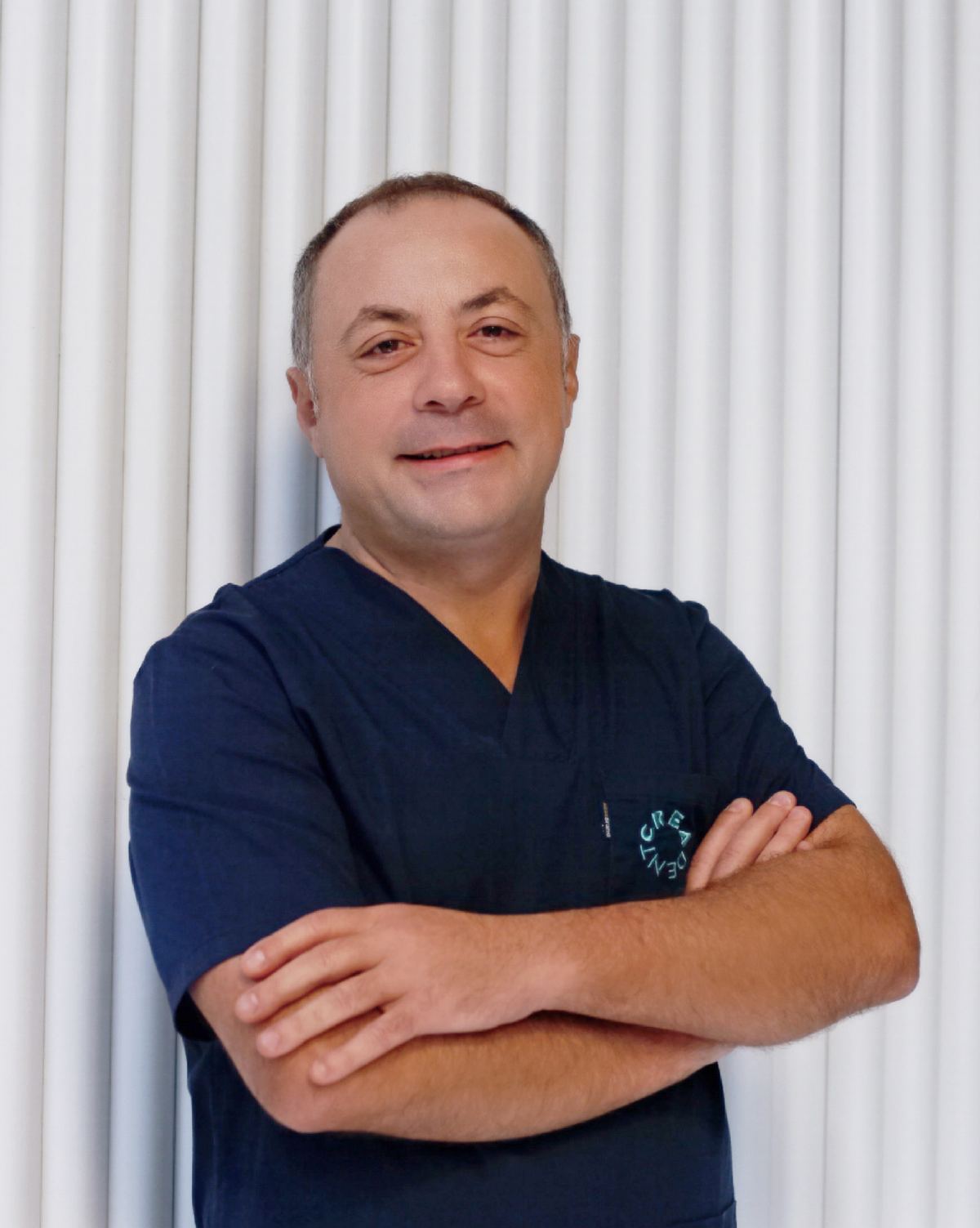
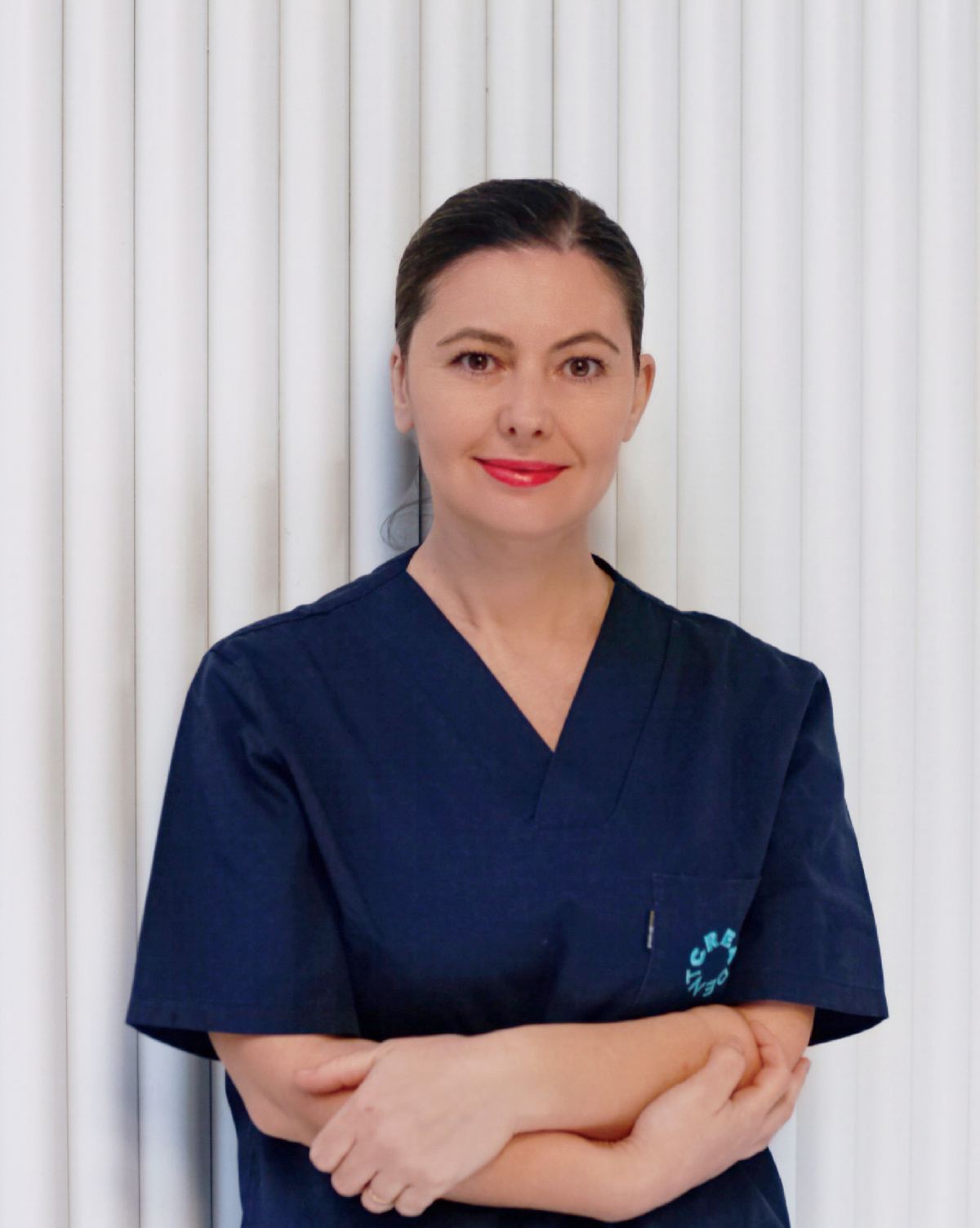
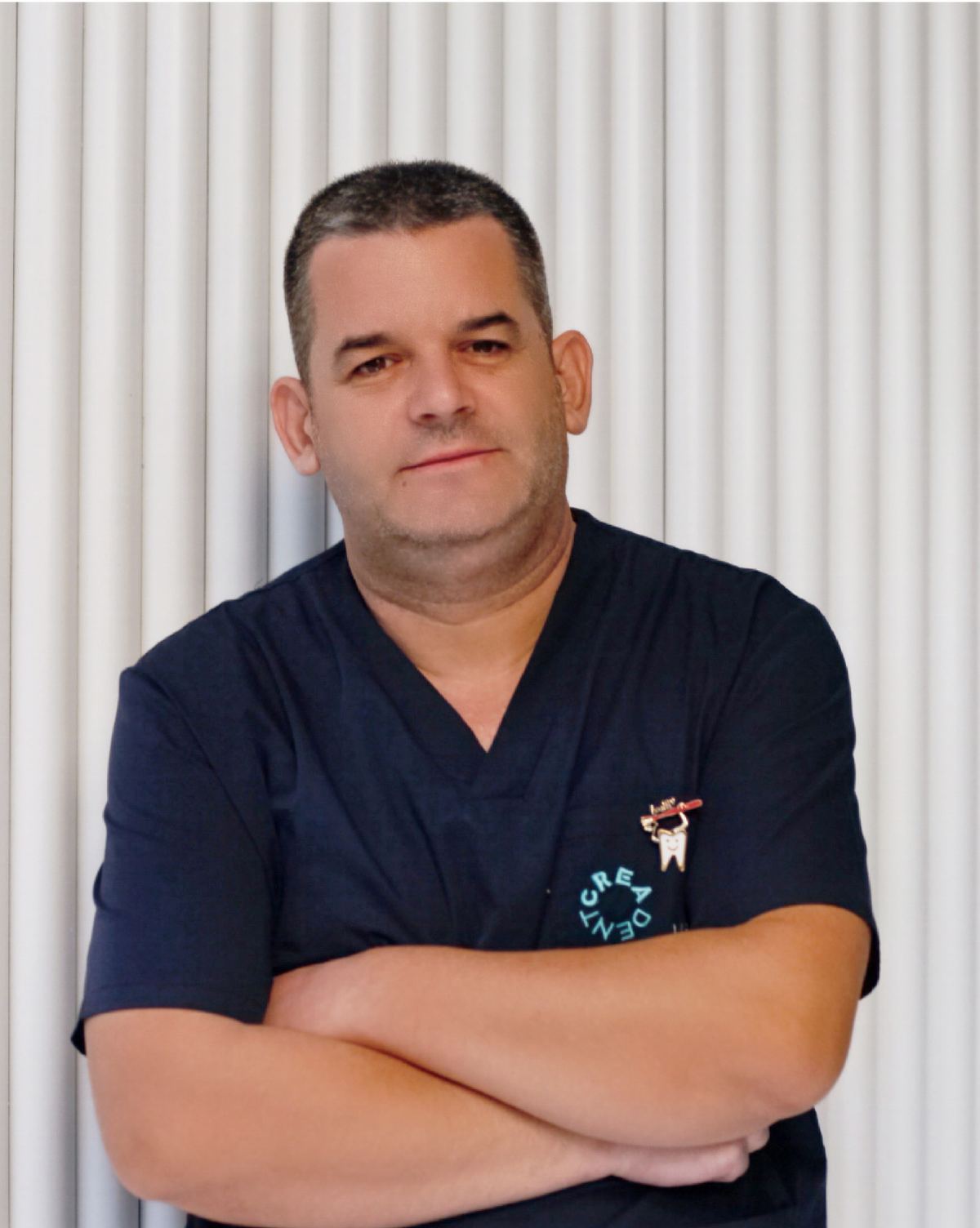
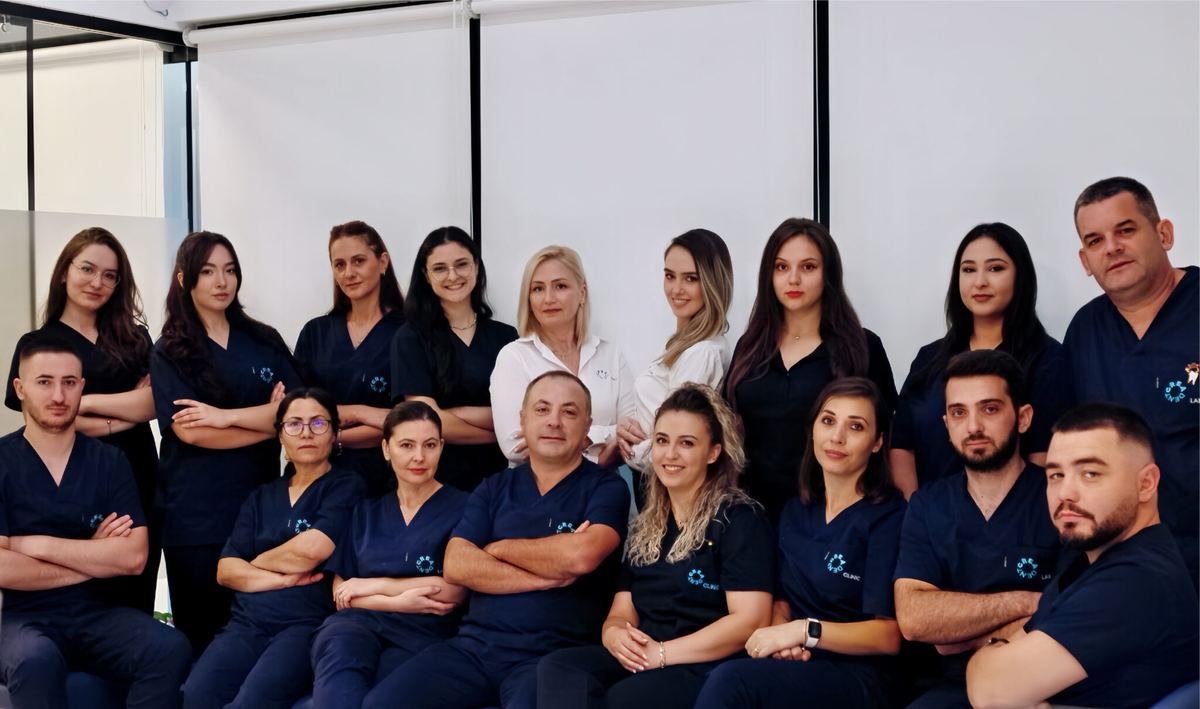
The surgeon who sees you is the same one who operates. The dental technicians build the prosthesis on implants in the laboratory inside the clinic and try it in with you in the chair.
How it runs here
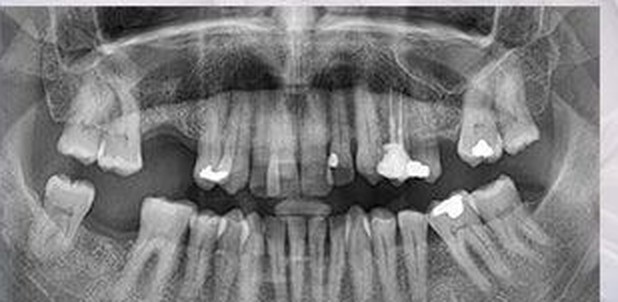
- The panoramic X-rayYou send us your dental panoramic X-ray: the dentist reads it and replies with the possible plan and the written quote. before you leave
- The 3D CT scan at the clinicIt shows the available bone and the position of the nerve: it decides how many implants, where, and whether a graft is needed first. the day you arrive
- The surgeryThe implants are placed in a sterile room, under local anaesthetic, with sedation when needed. one session
- The temporary teethWhere the case allows it, the laboratory prepares the fixed temporary straight away: you are not left without teeth. 2-3 days
- The final prosthesisAfter the implants have integrated, the digital impression and the final prosthesis, made and tried in here. 6-7 days, on the second trip
With what
- Implants
- Titanium implants: Straumann BLT and BLX, MegaGen, Hiossen, INNO; zygomatic and pterygoid implants in cases without bone.
- Abutments
- Titanium abutment from the implant maker, Ti-base with a screw-retained crown, or a custom milled abutment in titanium or zirconia.
- Prosthetics on implants
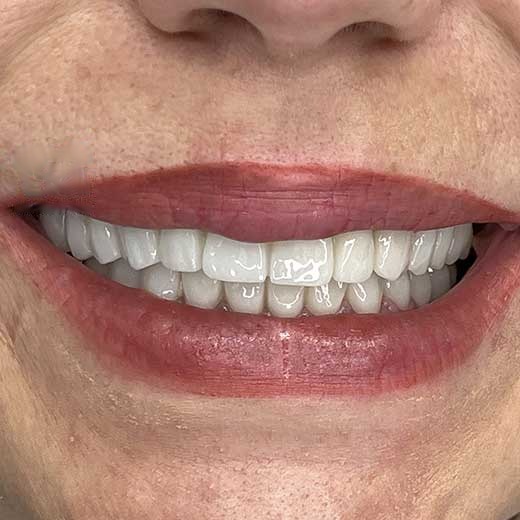
- Zirconia or metal-ceramic crowns and bridges, screw-retained or cemented; full arches on a milled titanium bar; fixed milled PMMA temporaries.
The written quote states, for each element, the implant, the abutment, the structure and the veneer with the manufacturer's name: it is the document the laboratory makes your work from.
For whom
- For people missing a tooth who do not want the neighbouring teeth filed down for a bridge.
- For people whose teeth are loose or falling out because of gum disease and who want fixed teeth.
- For people who wear a removable denture and want a fixed arch on four or six implants.
- For people with little bone: graft, sinus lift or zygomatic implants, decided from the CT scan.
The clinic on video
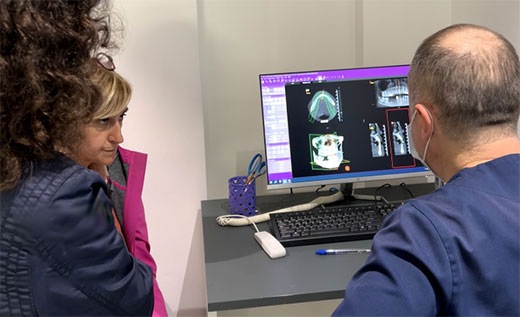
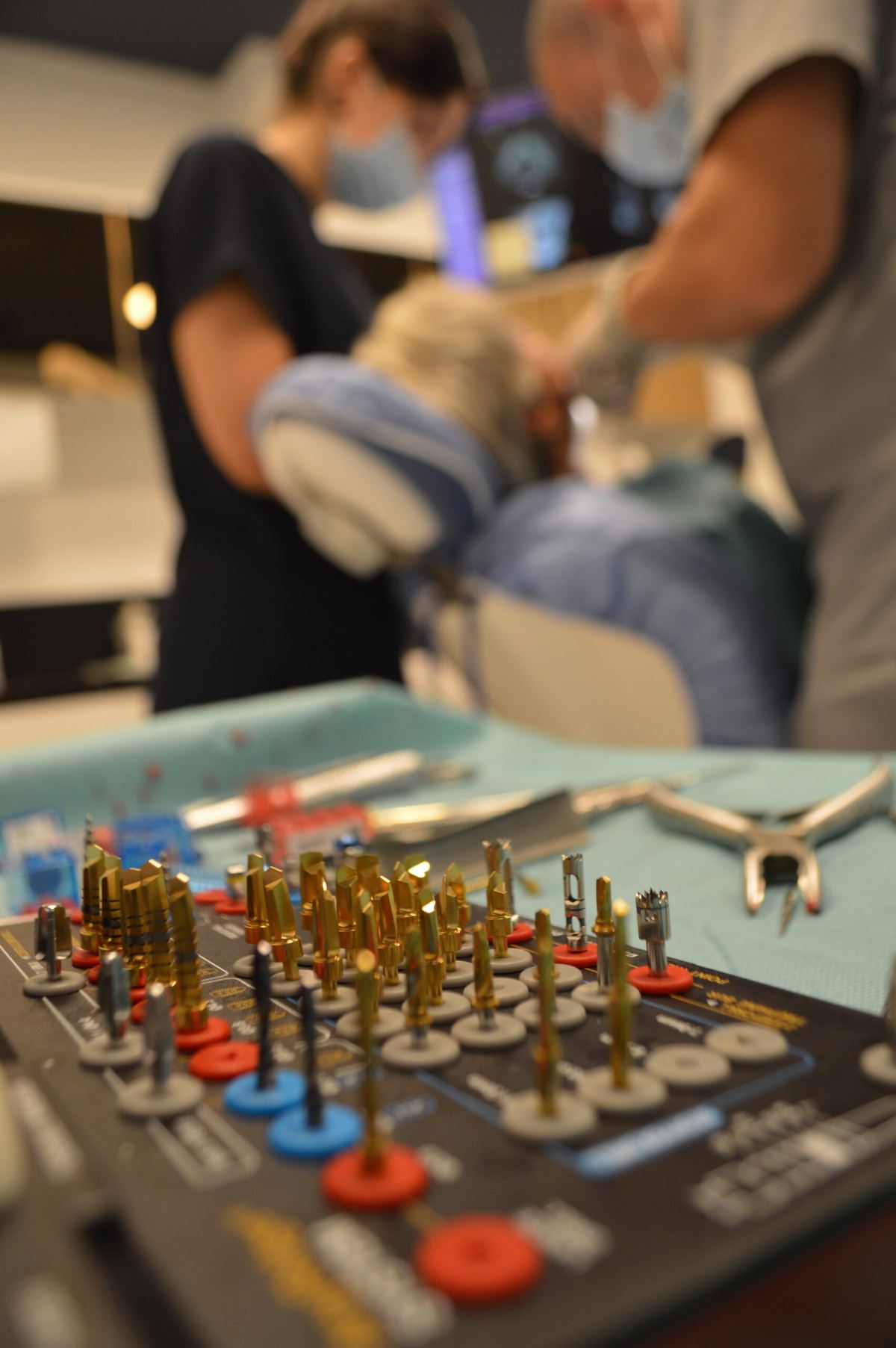
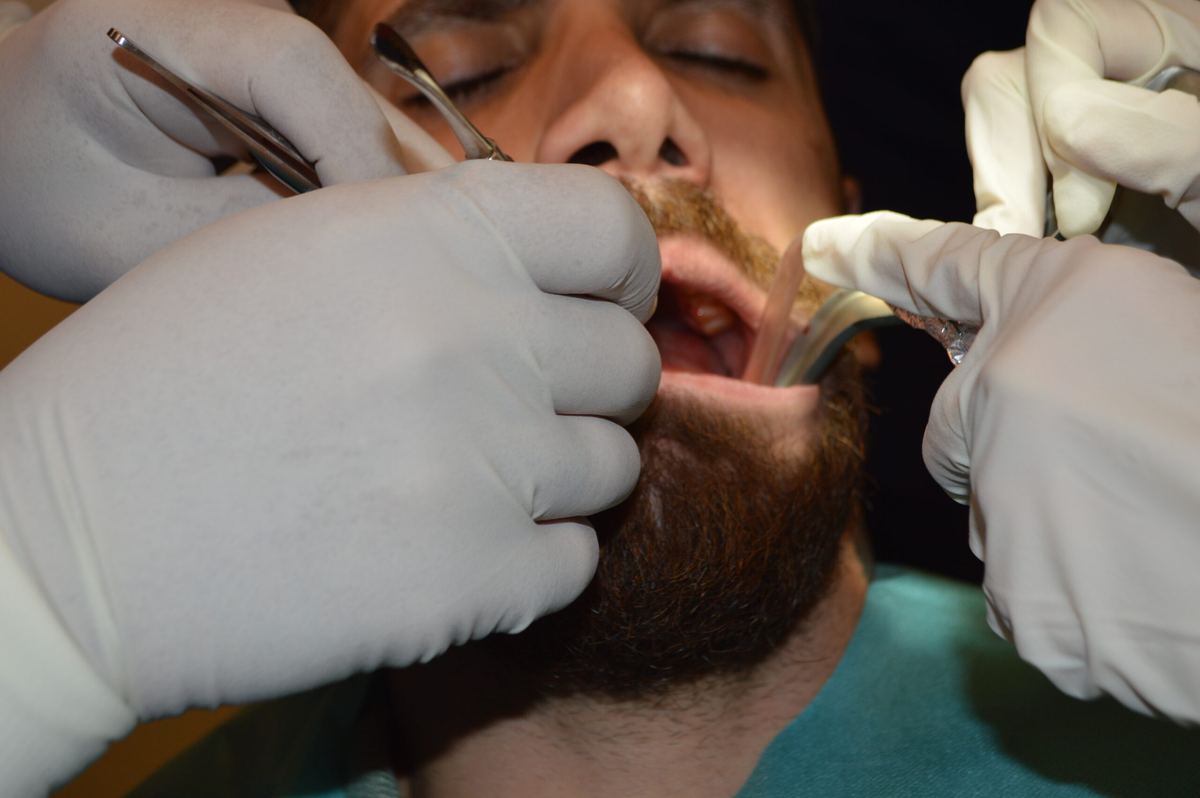
Dr Klodian Bila with a patient at the 3D CT scan, in pictures and on video.
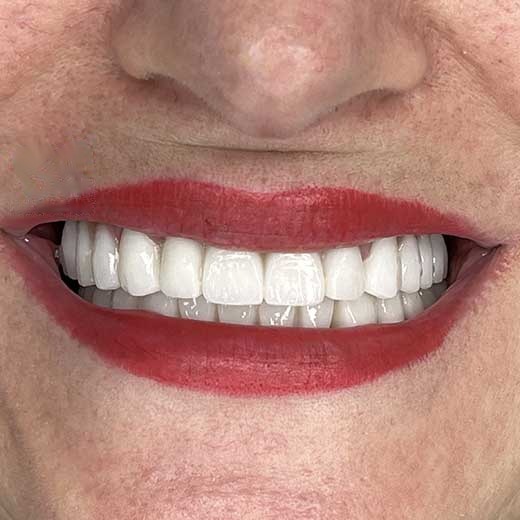
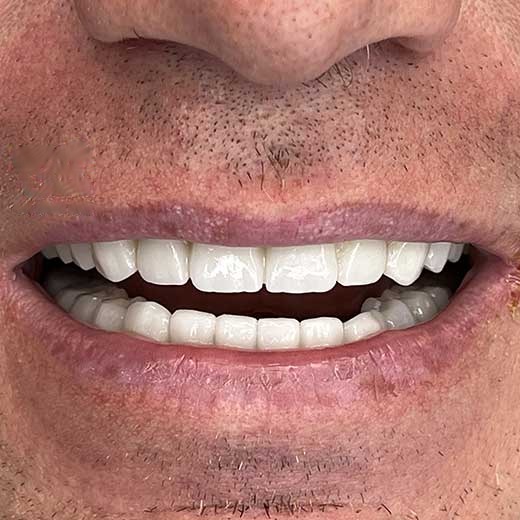
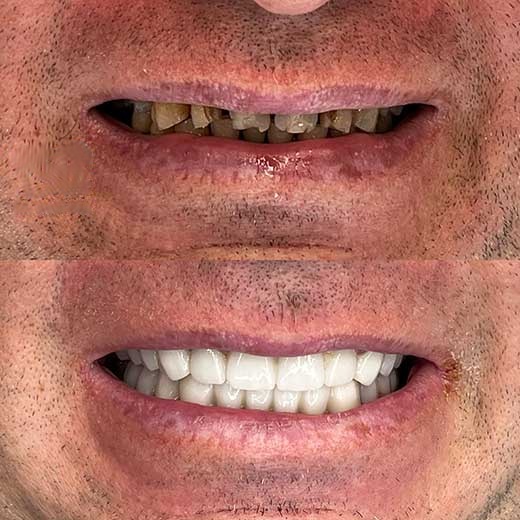
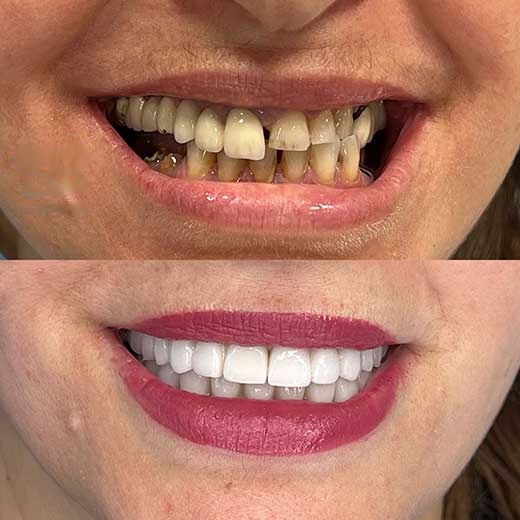
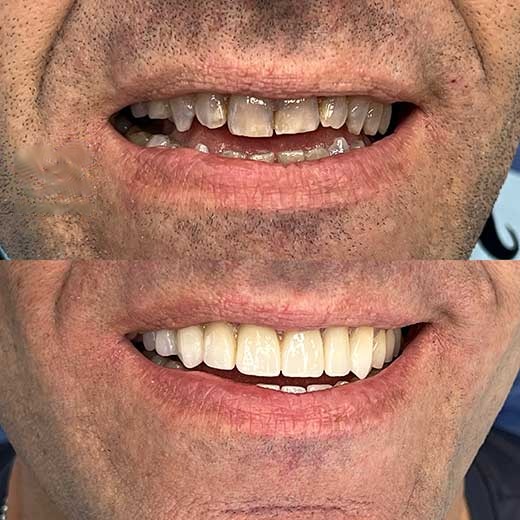
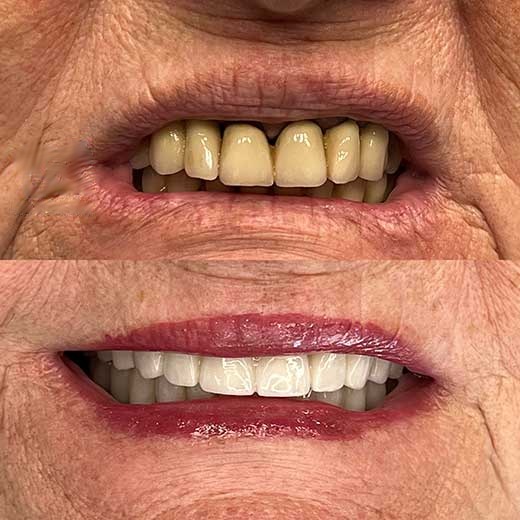
Dental implantology is the speciality that places dental implants to replace missing teeth. Set in the jawbone, the implants act as artificial roots carrying single teeth or bridges, and they restore both chewing and the look of the smile as a stable, long-term solution.
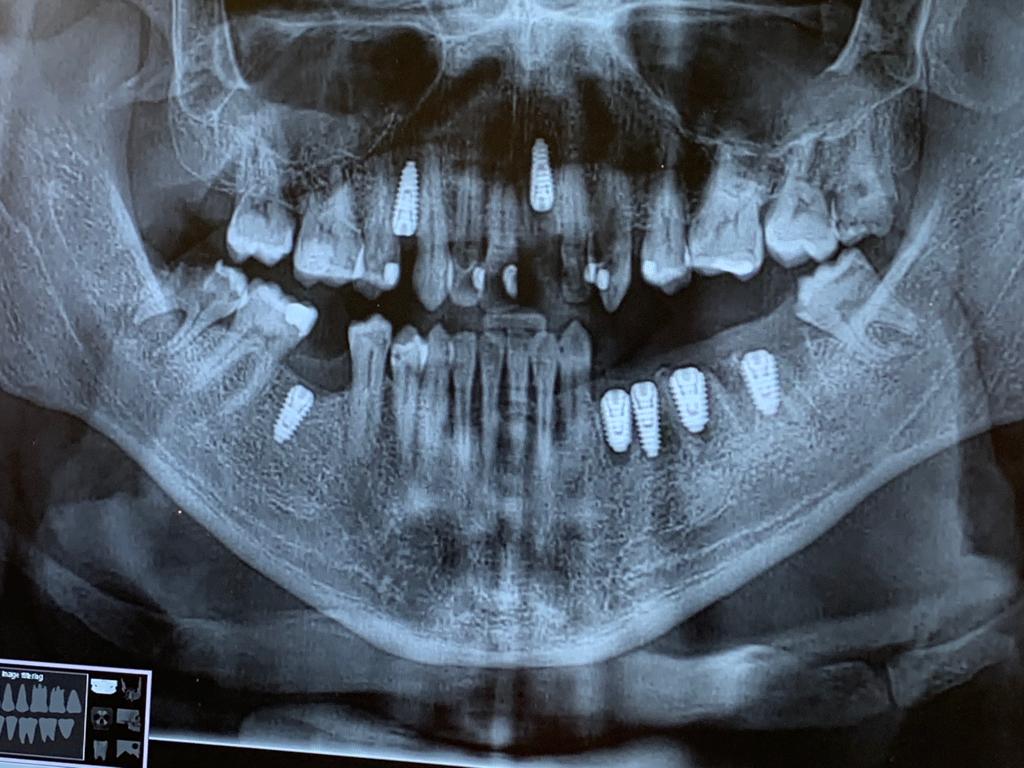
Every implant case starts with the 3D CT scan taken in the clinic: the bone height and width, and the position of the nerve, decide what is possible.
In this field, our offerings include
Why it matters to place an implant
If teeth have been lost over the years, or if the bone has receded and left the teeth loose, the implant is the way forward. The loss of one tooth inevitably makes the others drift: with nothing to lean on they begin to spread and open gaps, and besides poor chewing this lets food get into the gum pockets, causing infection and bone loss — not to mention the look of the smile. Even when only one tooth is missing it is always better to place an implant with its crown, to avoid damage. If several teeth are missing, for example a premolar and two molars, two implants and a bridge of three units can be used, and chewing can start again.
Where the teeth are healthy but periodontitis has caused bone loss, to the point of making all the teeth loose, extraction becomes unavoidable and the solution is a new arch on four or six implants.
The 3D CT scan decides
Before any implant is placed, the 3D CT scan is taken at the clinic. It shows the volume of bone actually available, its density and the position of the structures to be respected. It is the scan that says whether the implant can be placed directly, whether a bone graft or a sinus lift is needed first, and what diameter and length of implant are suitable. The treatment plan and the quote are drawn up after this examination, not before.
From the CT scan to the finished arch
The implant is placed in the bone and left to integrate. Where the bone is not enough, it is built up with a graft, or the sinus floor is lifted, before or at the same time as the implant. Once the implant has integrated, the abutment and the prosthetic work follow — a single crown, a bridge, or a full arch screwed onto the implants.
Because the laboratory is in the building, the arch is designed, milled, fired and fitted here, and it can be corrected in the chair with the technician present.
Screw-retained or cemented
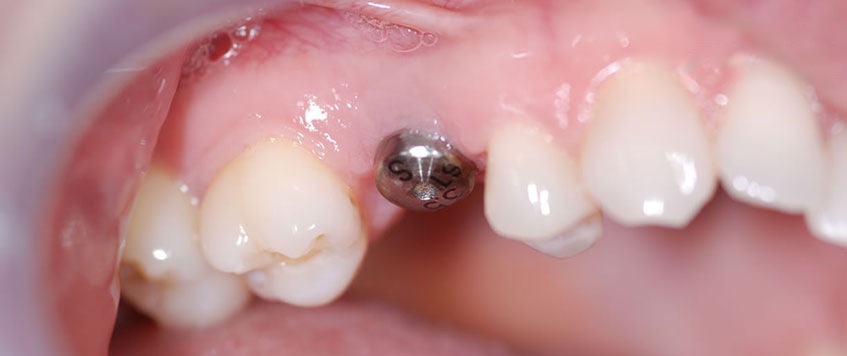
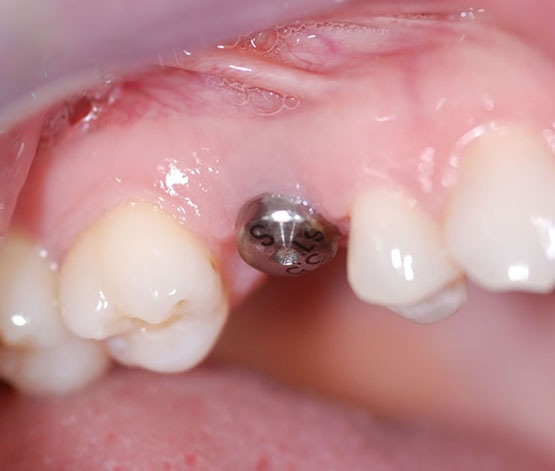
Single crowns and bridges can be screwed onto the implant or cemented. In the first case a connector between the crown and the implant is needed, the MUA: it is screwed onto the implant and a thread is left inside it, which lets the crown be fixed with a screw. In the second case the crown or bridge is cemented onto posts screwed into the implant, the abutments.
Screw-retained prostheses need slightly longer technical work, but during the try-ins they can be unscrewed and corrected, and if an infection appears over the years the prosthesis is unscrewed, without cutting it. Cemented prostheses are the traditional technique and work well; if problems arise, however, they have to be cut and remade.
Common cases
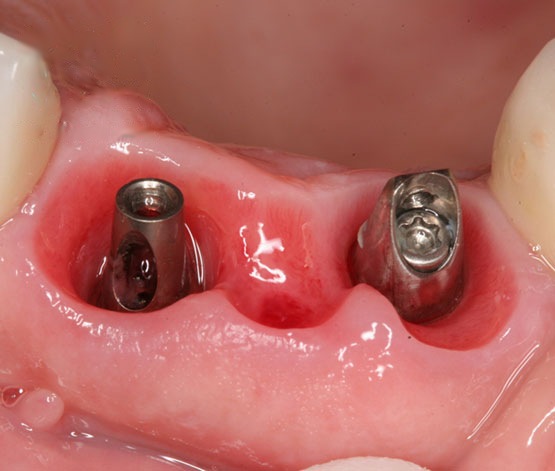
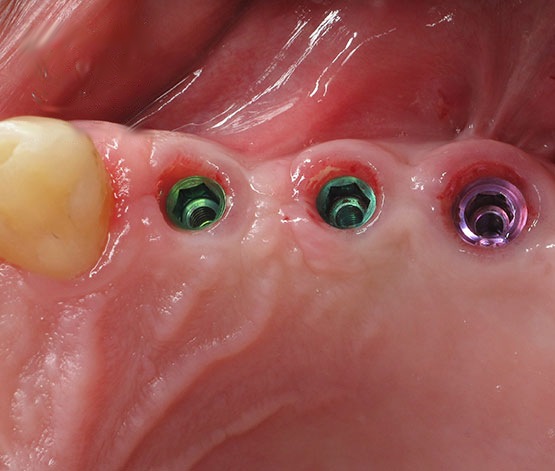
All on Four and All on Six
The All on Four protocol uses 4 implants per arch, upper or lower or both, onto which a screw-retained alloy structure is loaded, carrying a bridge of 12 teeth in zirconia or metal-ceramic. The advantage is that less bone is needed, so it becomes possible even for those who could not otherwise be treated. The limit is that the load is not spread over all the bone and at the back the arch is not anchored in the same way: with correct oral hygiene the risk is minimal, but it needs to be known.
The All on Six protocol uses 6 implants per arch and requires enough bone. The load is better distributed over the whole arch, the fit at the back is complete and this prevents infiltration.
Both protocols need two trips: the first for the surgery and the temporary arch, the second, after a few months, for the final arch in zirconia or metal-ceramic. The days of stay and the exact programme are set at the meeting with the dentist, after the 3D CT scan.
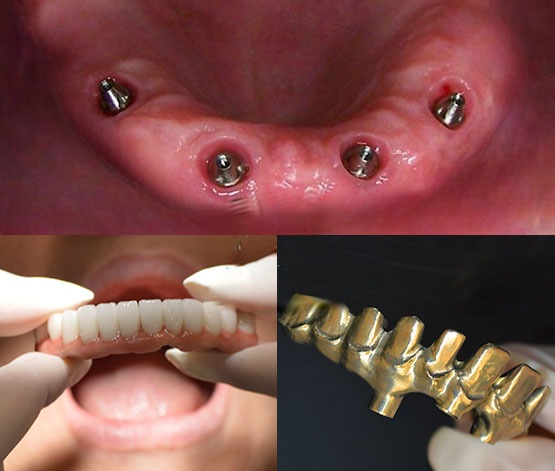
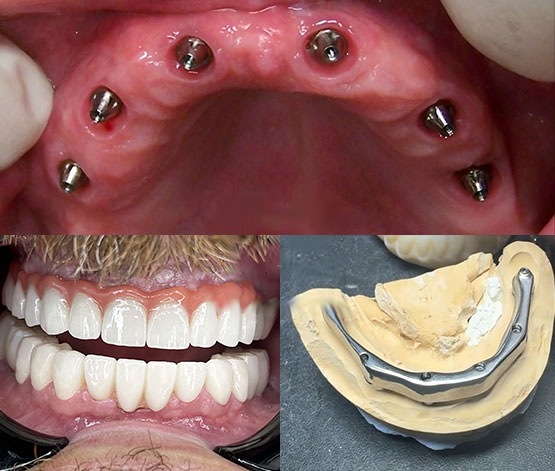
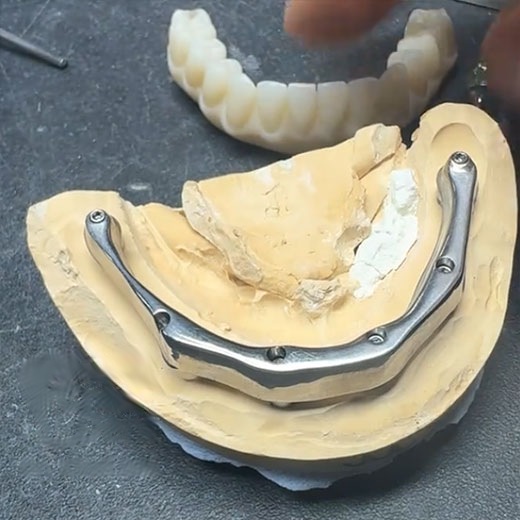
Two stages, two trips
An implant rehabilitation is done in two stages, separated by several months of bone healing: first the surgery, then the prosthesis. For patients who come from abroad this means two trips, and we say so from the quote onwards. One or two implants: you arrive in the morning and go home in the evening. Three to five implants: two days. A complete arch rehabilitation takes four days on the first trip. On the second trip: three days for the crowns on one or two implants, four days for three to five implants, six days for new arches.
The exact days are in the quote: they depend on your case and on the work in the laboratory, not on a standard scale.
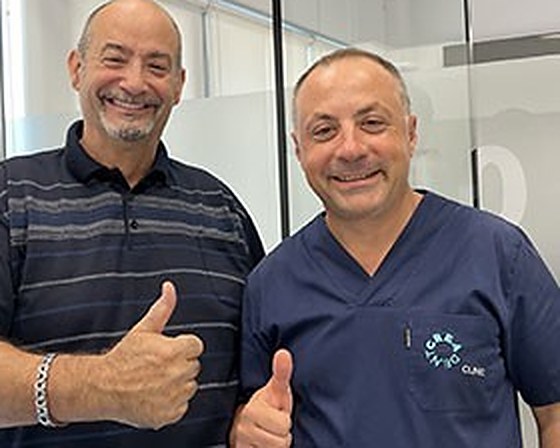
Travelling from the UK
Tirana has direct daily connections from many European airports. At the airport exit our driver is waiting for you with the clinic’s sign; the clinic’s apartment and the transfers are handled by us. To enter Albania, a valid passport is all you need.
The journey starts with the panoramic X-ray: you send it to us on WhatsApp or by e-mail, we look at it and fix the consultation with the doctor. The quote is written before you travel, with the number of visits and the days in Tirana your case needs.
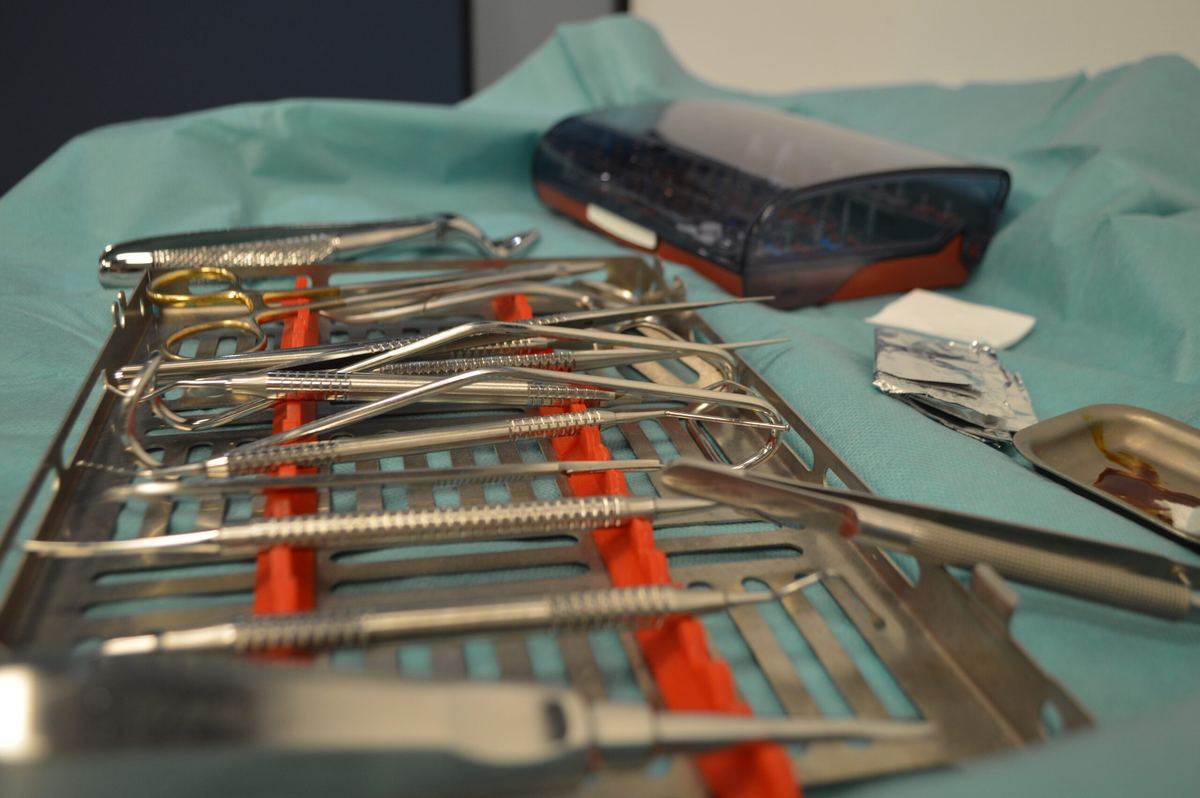
You are not left without teeth
Temporary arches in PMMA are made while the implants integrate, so there is no period without teeth, either to look at or to eat with. How long the whole route takes depends on the case, and we say so before it starts — not after.
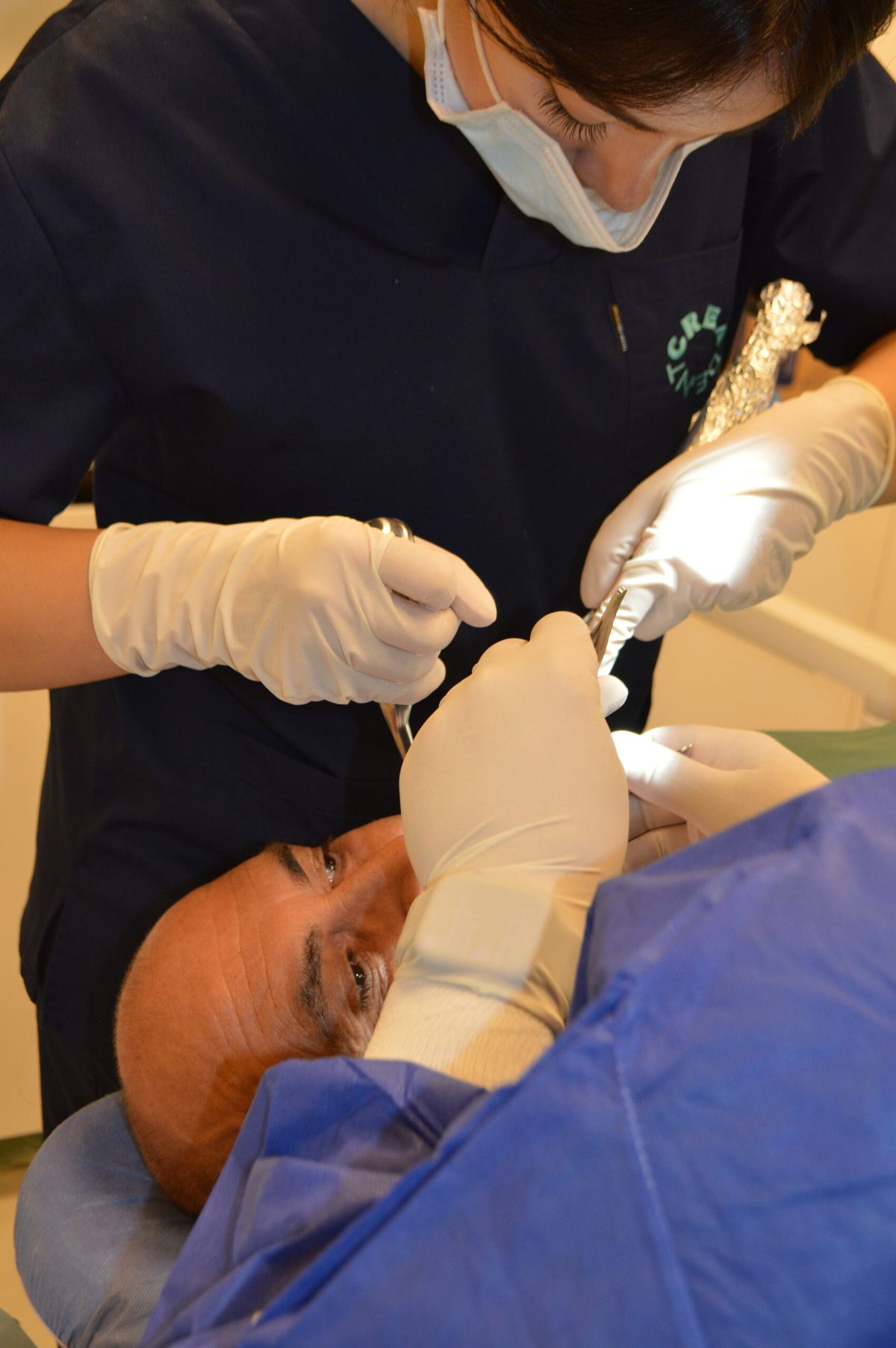
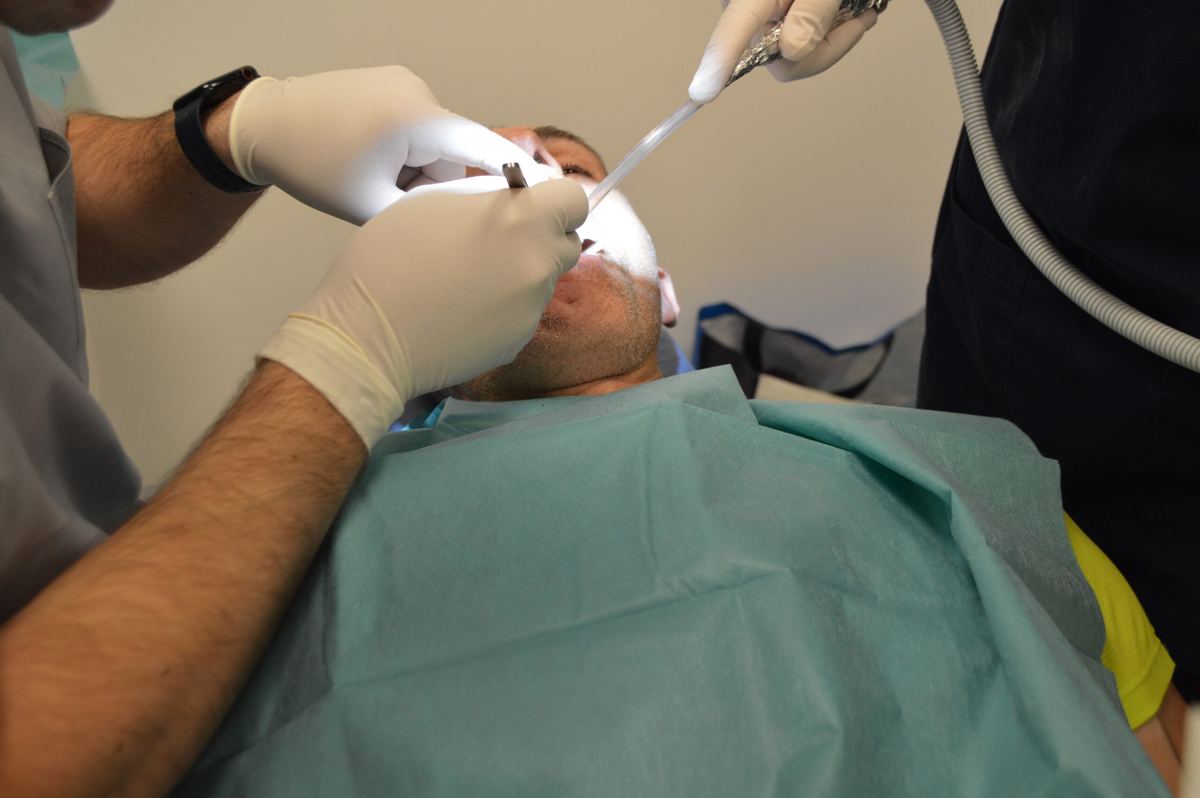
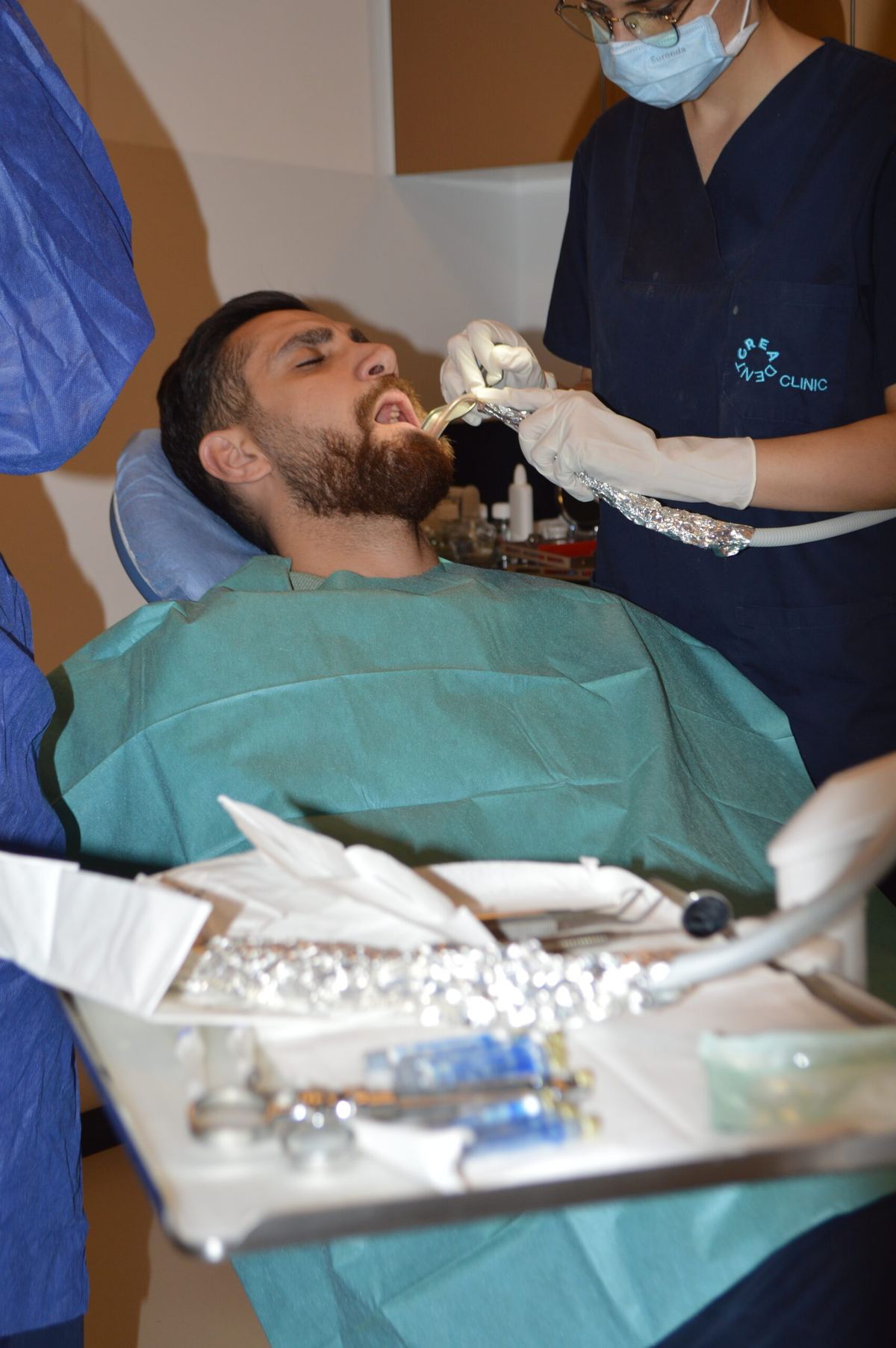
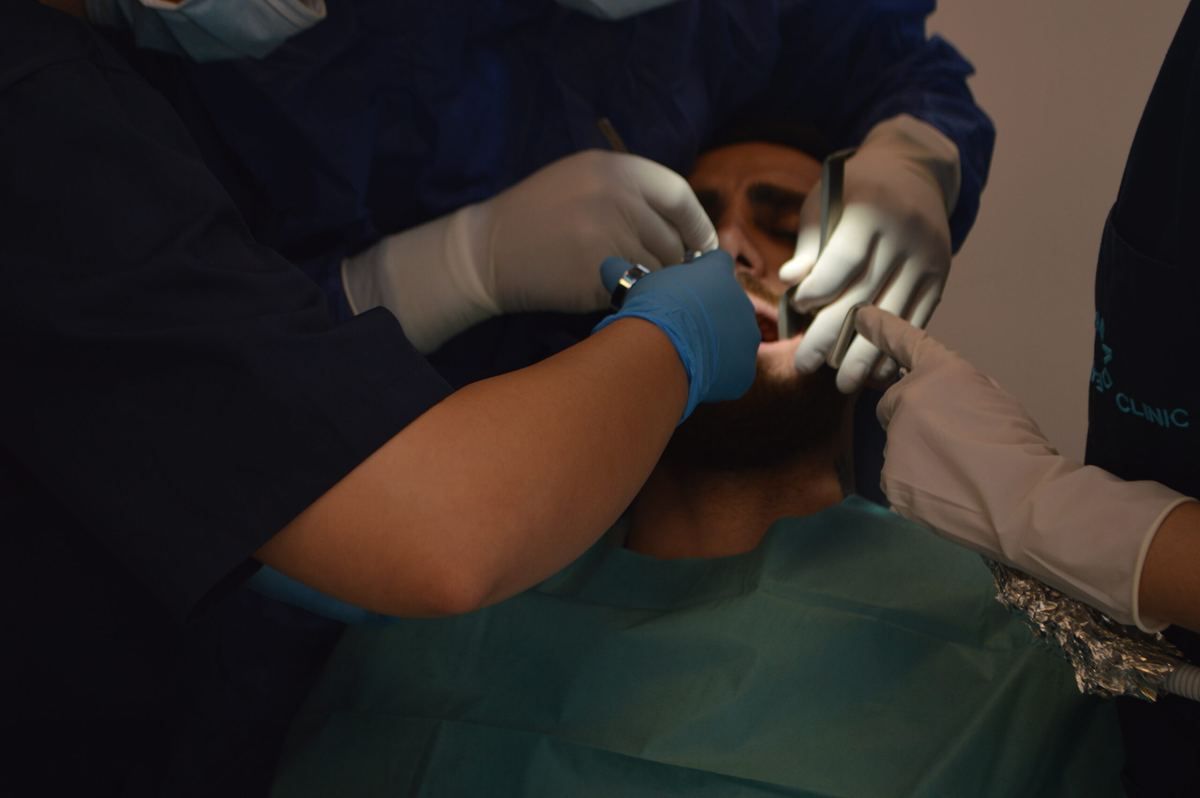
Treated cases
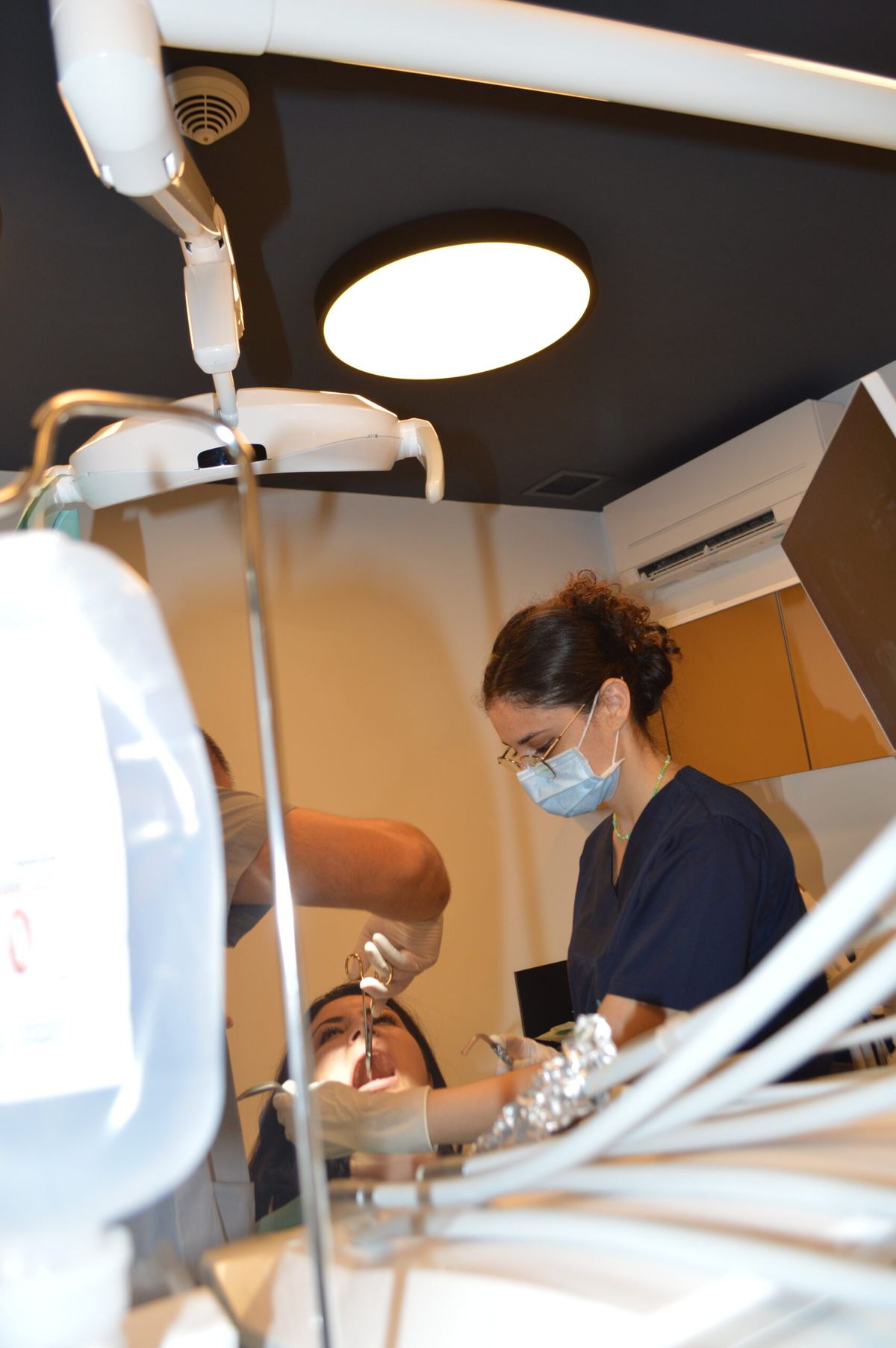
Frequently asked questions
How much do dental implants cost in Albania?
It depends on how many implants are needed, on the bone available and on the prosthesis fixed on them. The clinic's price list for implants is on the Prices page; with your panoramic X-ray or CT scan the dentist prepares a written quote for your case, with the stages and the trips.
Will I have teeth between the surgery and the final arch?
Yes. On a full-arch rehabilitation the first trip covers the surgery and the temporary arch; the final arch in zirconia or metal-ceramic is fitted on the second trip, after a few months of bone healing.
All on Four or All on Six: which one?
All on Four carries a bridge of 12 teeth on 4 implants per arch; All on Six uses 6 implants, spreads the load better and requires enough bone. The 3D CT scan decides, and the dentist explains it before the surgery.
How many trips do dental implants need?
Two. An implant rehabilitation is done in two stages separated by several months of bone healing: first the surgery, then the prosthesis. For patients from abroad this means two trips, and the quote says so from the start.
Loose or falling teeth: are implants the answer?
Often, yes. When teeth move because bone or gum has been lost, implants replace the roots and carry fixed teeth, single crowns or a full arch on All on Four or All on Six. The 3D CT scan shows whether the bone is enough or whether a bone graft or a sinus lift comes first.
How many days in Tirana for dental implants?
On the first trip: one or two implants are placed in one day, three to five implants take two days, a complete arch takes four days. On the second trip: three days for the crowns on one or two implants, four days for three to five implants, six days for new arches. The exact days are in your quote.